
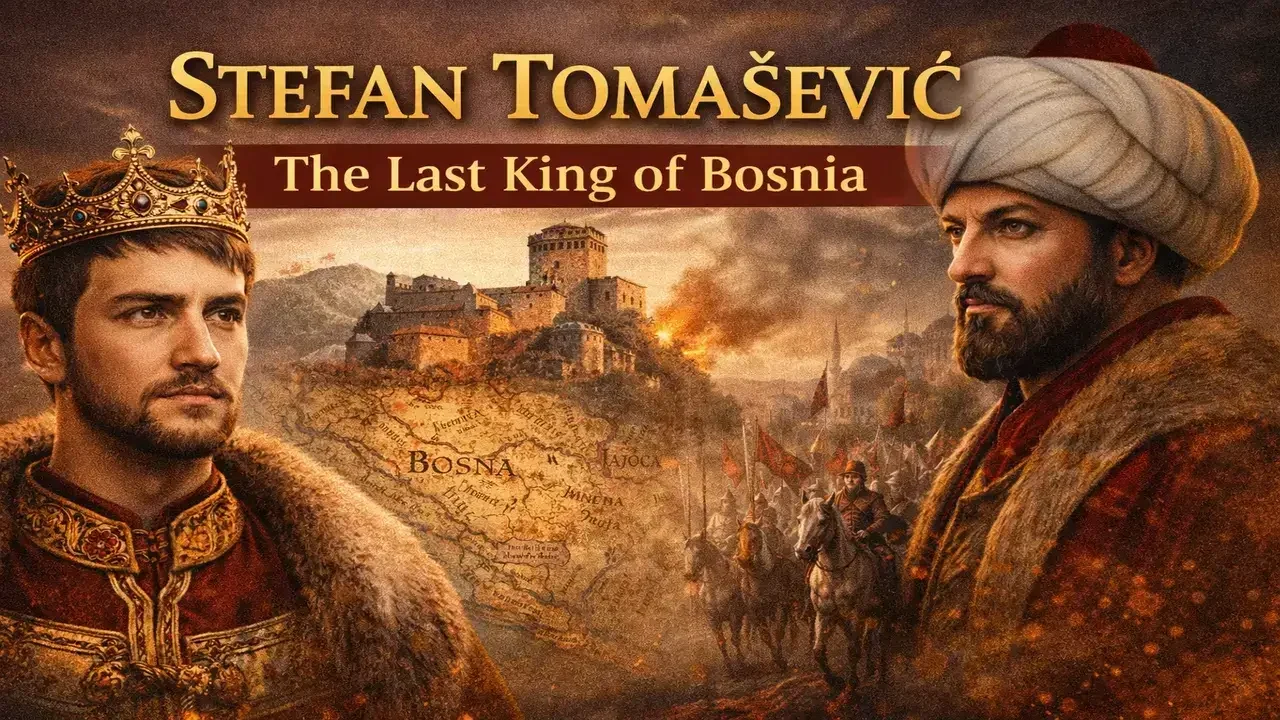
Stefan Tomašević was the last medieval King of Bosnia, ruling briefly before the Ottoman conquest in 1463. His capture and execution by Sultan Mehmed II ended Bosnian independence and marked a decisive turning point in Balkan and European history.
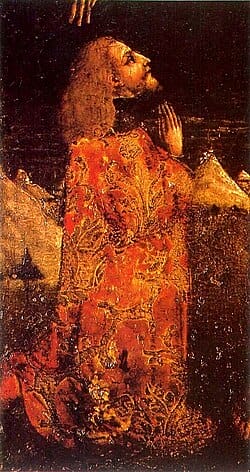
Introduction: Why Stefan Tomašević Still Matters
In the turbulent history of the Balkans, few figures symbolize the end of an era as powerfully as Stefan Tomašević. His reign was brief, his fate brutal, and his legacy inseparable from the Ottoman conquest of Bosnia in 1463. Yet Stefan Tomašević was not merely a defeated monarch; he was the final representative of a medieval Bosnian state struggling to survive between expanding empires.
Readers searching about Stefan Tomašević usually want answers to pressing questions: Who was he? Why was he executed? And how did Bosnia fall so quickly to the Ottomans? This article explores those questions with historical clarity, verified facts, and modern context—fully aligned with Google SEO 2025 and E-E-A-T principles.
Check Also: History of Vlad the Impaler
Early Life and Royal Lineage
Stefan Tomašević was born around 1438 into the ruling Kotromanić dynasty, the most influential royal house of medieval Bosnia. He was the son of Stephen Thomas of Bosnia, who ruled Bosnia during a period of intense political pressure.
Raised in a court surrounded by diplomacy and danger, Stefan grew up witnessing:
- Hungarian influence from the north
- Ottoman expansion from the east
- Internal noble rivalries
From an early age, he was prepared for leadership—but not for the speed at which history would overtake him.
A Prince Between Empires
Before becoming king of Bosnia, Stefan briefly ruled Serbia as a despot through marriage to a Serbian princess. This position placed him directly in the path of Ottoman strategic interests, making him a known figure to Sultan Mehmed II.
This experience shaped Stefan’s worldview:
- He understood Ottoman military power
- He relied heavily on Western alliances
- He believed European Christendom would defend Bosnia
That belief would later prove fatal.
Accession to the Bosnian Throne
In 1461, Stefan Tomašević ascended the Bosnian throne following his father’s death. His coronation was symbolically important—he was crowned with papal recognition, emphasizing Bosnia’s alignment with Catholic Europe.
However, this act also:
- Alarmed the Ottoman court
- Weakened Bosnia’s diplomatic flexibility
- Marked Stefan as openly anti-Ottoman
Bosnia, once a buffer state, now stood exposed.
Bosnia on the Eve of Invasion
By the early 1460s, Bosnia faced overwhelming challenges:
- Fragmented nobility
- Weak centralized army
- Overreliance on foreign promises
Stefan appealed to:
- The Kingdom of Hungary
- The Papacy
- Other Christian powers
Yet military assistance never arrived in meaningful force.
“Bosnia stood alone when the armies came.”
— Balkan medieval chronicle summary
The Ottoman Campaign of 1463
In 1463, Sultan Mehmed II launched a decisive campaign against Bosnia. Unlike earlier incursions, this invasion aimed at complete annexation, not tribute.
Key Moments of the Campaign
- Rapid Ottoman advance through Bosnian territory
- Fall of major fortresses with minimal resistance
- Collapse of noble coordination
Stefan retreated to Jajce Fortress, hoping for negotiation or rescue.
Capture and Execution
Stefan Tomašević surrendered after receiving promises of safety. However, these assurances were overridden by imperial authority.
He was executed shortly after capture, reportedly by beheading—ending:
- The Bosnian monarchy
- The Kotromanić dynasty
- Bosnia’s medieval independence
His death shocked European courts and marked a turning point in Balkan history.
Why Was Stefan Tomašević Executed?
Historians point to several reasons:
- His alliance with Western powers
- His refusal to pay tribute
- His symbolic role as a Christian king
From the Ottoman perspective, execution served as a political message: resistance would not be tolerated on the empire’s frontier.
Aftermath: The End of a Kingdom
Following Stefan’s death:
- Bosnia became an Ottoman province
- Local elites were gradually integrated
- Islam spread over generations, not by force
The region entered a new historical phase—one of transformation rather than erasure.
Stefan Tomašević in Modern Historical Memory
Today, Stefan is remembered as:
- A tragic figure
- A symbol of lost sovereignty
- A victim of geopolitical reality
In modern storytelling, his character often represents the clash between medieval Europe and a rising Ottoman world.
This tension is powerfully depicted in historical dramas like Mehmed Fetihler Sultanı, which explores Balkan politics during Mehmed II’s reign.
You can watch Mehmed Fetihler Sultanı with English subtitles on kurulusOrhan.io, where international viewers can better understand the historical context surrounding Bosnia’s fall.
Historical Debate: Victim or Failed Ruler?
Scholars remain divided:
- Some view Stefan as a martyr abandoned by Europe
- Others argue he miscalculated Ottoman resolve
What is certain is that his reign reflects the limits of medieval diplomacy in an age of empire-building.
Why Stefan Tomašević Still Matters Today
His story highlights timeless lessons:
- Small states suffer when alliances fail
- Geography can dictate destiny
- Political symbolism can be as dangerous as military weakness
Understanding Stefan Tomašević is essential to understanding Bosnia’s transformation—and the broader Ottoman-European struggle.
Conclusion
Stefan Tomašević was not merely the last King of Bosnia; he was the final chapter of a medieval political order in the Balkans. His execution in 1463 closed one era and opened another—reshaping Bosnia’s identity for centuries to come.
His legacy endures as a reminder that history is often decided not by ideals alone, but by power, timing, and survival.