
Who Was Mehmed the Conqueror?
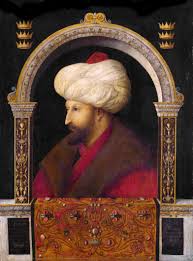
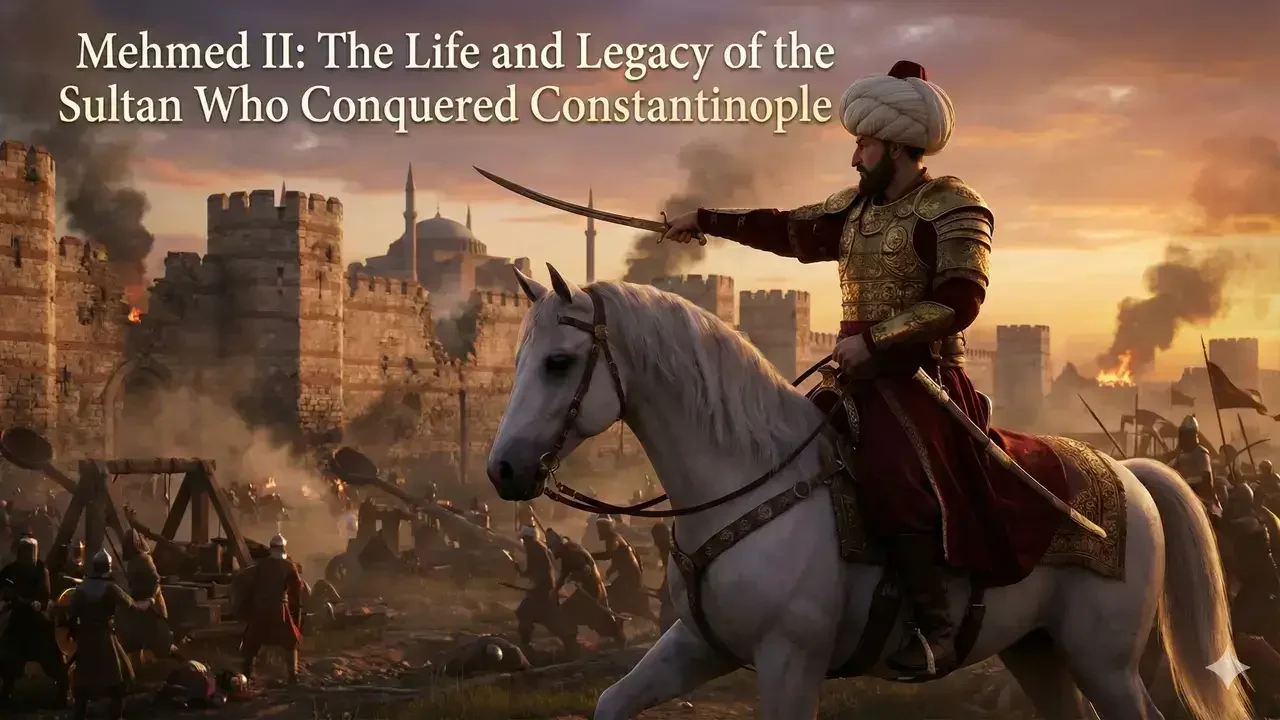
Mehmed II, widely revered as Fatih Sultan Mehmed (Mehmed the Conqueror), was the visionary Ottoman Sultan who reshaped global history by capturing Constantinople in 1453 at the age of 21. His reign (1444–1446; 1451–1481) marked the definitive end of the Byzantine Empire and the Middle Ages. Beyond his military prowess, Mehmed was a polymath, a patron of the arts, and the architect of Istanbul’s rise as an Islamic and trade capital, effectively establishing the Ottomans as a transcontinental superpower.
Check Also: Orhan Gazi: The Iconic Sultan Who Built a Legendary Empire
The Early Years: A Prince Forged in Fire
Born on March 30, 1432, in Edirne, Mehmed was the third son of Sultan Murad II and Hüma Hatun. Unlike typical princes raised in luxury, Mehmed’s path to the throne was paved with rigorous discipline and early trauma.
The Education of a Polymath
At a young age, Mehmed was sent to Manisa to govern, a traditional practice to prepare Ottoman princes for leadership. However, he was initially rebellious. His father appointed the stern mullah Molla Gürani and the spiritual scholar Akshamsaddin to discipline him.
Under their tutelage, Mehmed’s intellect flourished. Historians note that he became a true polymath, mastering:
- Languages: Fluent in Turkish, Arabic, Persian, Greek, Latin, and Serbian.
- Sciences: Deeply interested in geography, mathematics, and astronomy.
- History: He studied the lives of Alexander the Great and Julius Caesar, dreaming of surpassing their legacies.
The Trauma of the First Reign (1444–1446)
In a shocking turn of events, Murad II abdicated the throne, leaving the 12-year-old Mehmed to rule. This period was chaotic. The Janissaries (elite soldiers) revolted, and European powers launched the Crusade of Varna, sensing weakness in the child sultan.
The Grand Vizier, Çandarlı Halil Pasha, undermined Mehmed’s authority, eventually forcing Murad II to return to the throne. This humiliation shaped Mehmed’s character. When he ascended the throne a second time in 1451, he was no longer a child—he was a calculated strategist determined to prove his absolute authority.
Check Also: Kingdom of Pontus Explained: Legends, Battles & Historical Impact
The Obsession with Constantinople
For centuries, Constantinople had been the “Red Apple” (Kızıl Elma)—the ultimate prize for Islamic rulers. It controlled the Bosphorus Strait, the gateway between Asia and Europe. For Mehmed II, conquering it was not just a military goal; it was a destiny foretold in Islamic tradition.
Isolating the City
Mehmed’s strategy was methodical. Before a single arrow was fired, he cut off the city’s lifeline.
- Rumelihisarı (The Throat Cutter): In just four months, he built this massive fortress on the European side of the Bosphorus, directly across from his grandfather’s Anadolu Fortress. This effectively controlled all shipping traffic, starving the Byzantines of supplies from the Black Sea.
- The Cannons of Orban: Mehmed realized that medieval walls could only be broken by modern technology. He hired Orban, a Hungarian iron founder, to cast the “Basilica”—a cannon so large it required 60 oxen to move.
The Siege of 1453: 53 Days of Hell
On April 6, 1453, the Ottoman army, estimated at 80,000 to 100,000 strong, arrived at the walls of Constantinople. Inside, Emperor Constantine XI had only about 7,000 defenders, including expert Genoese mercenaries led by Giovanni Giustiniani.
The Impenetrable Chain and the Golden Horn
The city was protected by the Theodosian Walls on land and the sea on three sides. The weak point was the Golden Horn harbor, but the Byzantines had blocked its entrance with a massive iron chain, preventing the Ottoman navy from entering.
The Impossible Maneuver: Ships Over Land
Stalled by the chain, Mehmed II executed one of the most audacious maneuvers in military history. On the night of April 21, his engineers laid a plank road of greased logs over the steep hill of Galata. Using brute strength and oxen, the Ottomans dragged roughly 70 ships overland and launched them into the Golden Horn behind the enemy chain.
When the sun rose, the Byzantine defenders were horrified to see the Ottoman fleet in their harbor. Their morale shattered.
May 29, 1453: The Final Assault
After weeks of bombardment, Mehmed ordered the final assault.
- First Wave: Irregular troops (Bashi-bazouks) wore down the defenders.
- Second Wave: Anatolian infantry attacked the breached walls.
- Third Wave: The elite Janissaries launched the decisive strike.
The walls were breached near the St. Romanus Gate. Emperor Constantine XI died fighting (his body was never definitively identified). Mehmed entered the city, rode to the Hagia Sophia, and prayed, marking the end of the Roman Empire. He declared himself Kayser-i Rum (Caesar of Rome).
Building an Empire: Governance and Culture
Mehmed the Conqueror was not merely a destroyer of the old order; he was a builder of a new one.
Transformation of Istanbul
Mehmed immediately began rebuilding the depopulated city. He established the Grand Bazaar (Kapalıçarşı) to jumpstart the economy and built the Topkapi Palace as the seat of government.
The Millet System and Religious Tolerance
Understanding that the city needed its people, Mehmed encouraged Greeks, Armenians, and Jews to stay. He implemented the Millet System, allowing religious minorities to govern their own internal affairs under their own laws. He appointed Gennadius Scholarius as the Patriarch of the Orthodox Church, ensuring the loyalty of his Christian subjects.
The Kanunname (Code of Law)
Mehmed codified secular laws (Kanun) to run alongside Islamic law (Sharia). His Kanunname established the organizational structure of the Ottoman state, detailing the hierarchy of the bureaucracy, taxation, and the controversial “Law of Fratricide,” which allowed a new sultan to execute his brothers to prevent civil war.
The Endless Campaigns: West and East
Mehmed’s thirst for conquest did not end in Istanbul. He aimed to unite the lands of the old Roman Empire.
- The Balkans: He annexed Serbia (1459) and Morea (1460).
- Vlad the Impaler: Mehmed faced a brutal guerilla war against Vlad III (Dracula) of Wallachia. Though Vlad inflicted heavy casualties with his night attacks, Mehmed eventually marched on his capital, forcing Vlad into exile and installing his brother, Radu the Handsome, as a puppet ruler.
- The Eastern Front: In 1473, at the Battle of Otlukbeli, Mehmed utilized his superior artillery to crush the Aq Qoyunlu led by Uzun Hasan, securing the Ottoman eastern borders.
- The Italian Campaign: In 1480, Ottoman forces landed in Otranto, Italy. Europe panicked, fearing Rome was next. However, the campaign halted abruptly upon Mehmed’s death.
Mehmed Fetihler Sultanı: A Modern Retelling
The dramatic life of Fatih Sultan Mehmed—from the psychological pressure of his childhood to the thunder of the cannons at Constantinople—is currently capturing audiences in the TV series Mehmed: Fetihler Sultanı. The show provides a visual feast of the era’s costumes, political intrigue, and warfare.
For international fans who want to understand the true scale of these historical events, watching the series with accurate translations is crucial. To watch Mehmed Fetihler Sultanı with English subtitles, you should visit kurulusorhan.io. The site provides updated episodes that help bridge the language gap for history enthusiasts.
The Mysterious Death of a Legend
In the spring of 1481, Mehmed II gathered his army for a massive campaign. The target was kept secret, though many believed it was Egypt or Rome. However, shortly after leaving Istanbul, the Sultan fell ill.
He died on May 3, 1481, at the age of 49 at the Hünkârçayırı encampment near Gebze.
- Theory of Poison: Venetians claimed responsibility, alleging his Jewish physician, Yakub Pasha (Maestro Iacopo), poisoned him.
- Natural Causes: Modern medical analysis suggests complications from gout and diabetes.
His death triggered a civil war between his sons, Bayezid II and Cem Sultan, but his legacy was secure. He left behind a superpower that would dominate the world stage for another 400 years.
Historical Timeline of Mehmed II
- 1432: Born in Edirne to Sultan Murad II.
- 1444: First ascension to the throne (Age 12).
- 1451: Second ascension to the throne; begins preparations for Constantinople.
- 1452: Construction of Rumelihisarı fortress completed.
- 1453: Conquest of Constantinople (May 29).
- 1459-1463: Conquest of Serbia and Bosnia.
- 1461: Conquest of Trebizond, ending the last Greek empire.
- 1475: Conquest of Caffa; Crimea becomes a vassal state.
- 1480: Siege of Rhodes (failed) and Capture of Otranto (Italy).
- 1481: Death of Mehmed the Conqueror.
Frequently Asked Questions (FAQs)
Was Mehmed II a good or bad ruler?
Historically, he is viewed as a brilliant and effective ruler. While ruthless to his enemies (and family, via the Law of Fratricide), he was a patron of arts, a lawgiver, and practiced religious tolerance towards Christians and Jews in Istanbul, which was rare for the medieval era.
Did Mehmed II really convert Hagia Sophia?
Yes. Upon entering the city, he rode to the Hagia Sophia. Following Islamic custom of the time for conquered cities, he converted the cathedral into a mosque but ordered that the mosaics be covered with plaster rather than destroyed, which helped preserve them for history.
Who was Mehmed II’s greatest enemy?
While he fought many, Skanderbeg of Albania and Vlad the Impaler of Wallachia were his most persistent rivals. They used guerilla tactics to frustrate Ottoman advancements for years, though Mehmed ultimately outlasted both.
Where can I watch the Mehmed II TV series?
To watch the historical drama Mehmed Fetihler Sultanı with English subtitles, you can visit kurulusorhan.io, which hosts the episodes for English-speaking audiences.


4 Comments
[…] the Karasu incident has put the Ottoman Empire and Akkoyunlu state under enormous pressure, while Sultan Mehmed is still focused on his larger […]
[…] Sultan Mehmed […]
[…] Serkan Çayoğlu — Sultan Mehmed […]
[…] Fetihler Sultanı tells the story of Sultan Mehmed II, one of the most important rulers of the Ottoman […]