
Princess Asporça, remembered as Asporça Hatun, was a Byzantine noblewoman married to Orhan Gazi, the second Ottoman ruler. Her marriage reflected early Ottoman diplomacy, and her 1323 vakfiye remains one of the earliest documents showing royal women owning land in the Ottoman state.
Introduction: A Woman History Rarely Speaks About
When the story of the early Ottoman Empire is told, the focus usually rests on battles, conquests, and sultans. Yet behind these events were women whose influence was subtle but lasting. One such figure is Princess Asporça, a Byzantine noblewoman who entered Ottoman history through marriage.
Known in Ottoman records as Asporça Hatun, she lived during a time when the Ottomans were still shaping their identity. Her life offers a rare window into how diplomacy, family ties, and governance quietly worked together in the empire’s formative years.
Who Was Princess Asporça?
The exact origins of Princess Asporça are not fully settled, a reality common in early medieval history. Most historians agree on one point: she belonged to Byzantine aristocracy.
Her Byzantine Background
- Several Ottoman and Byzantine-era sources describe her as a Greek noblewoman
- Some historians suggest a connection to circles close to Emperor Andronikos III, though this remains debated
- Her name, Asporça, is widely accepted as Greek in origin
Rather than weakening her story, this uncertainty reflects the fragmented records of the 14th century and strengthens the need for careful historical interpretation.
Marriage to Orhan Gazi: Politics Over Romance
The marriage between Princess Asporça and Orhan Gazi likely occurred around 1316, during a period of rapid Ottoman expansion in northwestern Anatolia.
Why This Marriage Mattered
- Ottoman forces were advancing toward Bursa and Iznik
- Local Byzantine leaders often chose marriage alliances to preserve status
- Such unions reduced resistance and stabilized newly captured regions
For the Ottomans, Asporça’s marriage was not just symbolic—it was practical diplomacy.
Life as Asporça Hatun in the Ottoman Court
After her marriage, Princess Asporça became Asporça Hatun, adapting to Ottoman court life. This period predates the later institutionalized imperial harem, meaning women often managed estates and foundations directly.
Children and Dynastic Role
Historical records suggest that Asporça Hatun was the mother of Şehzade İbrahim, one of Orhan Gazi’s sons. While some details remain debated, most sources agree that:
- Şehzade İbrahim served as a provincial governor
- He did not ascend the throne, which later went to Murad I, son of Nilüfer Hatun
- Asporça Hatun may also have had a daughter, often identified as Fatma Hatun, though documentation is limited
The 1323 Vakfiye: Her Strongest Historical Proof
The most concrete evidence of Asporça Hatun’s status is the 1323 vakfiye, a legal endowment deed issued by Orhan Gazi.
Why This Document Is Important
- It grants land and villages to Asporça Hatun and Şehzade İbrahim
- It shows early Ottoman recognition of women’s property rights
- It predates many later imperial vakfiyes involving royal women
Historians often cite this document as proof that early Ottoman governance allowed elite women meaningful economic agency.
Rivalries Within the Court
The household of Orhan Gazi included several prominent women, each reflecting different political moments.
Key Figures
- Nilüfer Hatun (Holofira): Mother of Murad I, later highly influential
- Theodora Kantakouzene: Married Orhan in 1346 as part of a Byzantine imperial alliance
- Asporça Hatun: Representing an earlier phase of Ottoman–Byzantine cooperation
Rather than open conflict, these relationships reflected shifting alliances and priorities within the early Ottoman state.
Princess Asporça in Modern Historical Interest
With the global popularity of Ottoman historical dramas, interest in early figures like Asporça Hatun has grown. While dramatizations vary, her presence highlights the political importance of marriage and diplomacy.
Watch the Orhan Gazi Era
For viewers exploring this period through drama, the Kuruluş Orhan series focuses on Sultan Orhan Gazi’s rise.
👉 Internal link suggestion:
Watch Sultan Orhan Gazi’s story in Kuruluş Orhan with English subtitles on kurulusorhan.io
Her Death and Burial
While no exact death date is recorded, most historians believe Asporça Hatun died during or shortly after Orhan Gazi’s reign.
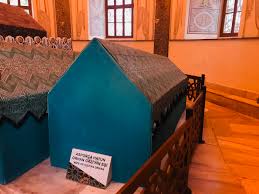
She is traditionally believed to be buried in Bursa, near the Orhan Gazi Tomb, a placement that reflects her recognized status within the dynasty, though precise burial records remain limited.
Historical Timeline
- Late 13th century: Birth into Byzantine nobility
- c. 1316: Marriage to Orhan Gazi
- 1323: Issuance of the Asporça Hatun vakfiye
- 1326: Ottoman conquest of Bursa
- Mid-14th century: Later years spent in Bursa
- Burial: Traditionally associated with the Orhan Gazi complex
Why Asporça Hatun Still Matters
Princess Asporça represents an early Ottoman model of governance based on adaptation rather than exclusion. Her life shows that women could hold land, manage wealth, and influence stability without appearing in military chronicles.
In a period defined by transition, her role was quiet—but foundational.
People Also Ask (FAQs)
Was Princess Asporça the same as Nilüfer Hatun?
No. They were different wives of Orhan Gazi with distinct roles and children.
Did Asporça Hatun have a son?
Most historical sources associate her with Şehzade İbrahim, though some details remain debated.
Why is the 1323 vakfiye important?
It is one of the earliest Ottoman documents confirming land ownership by a royal woman.
Is Asporça Hatun shown in Kuruluş Orhan?
Some characters may be inspired by historical figures, depending on narrative interpretation.