
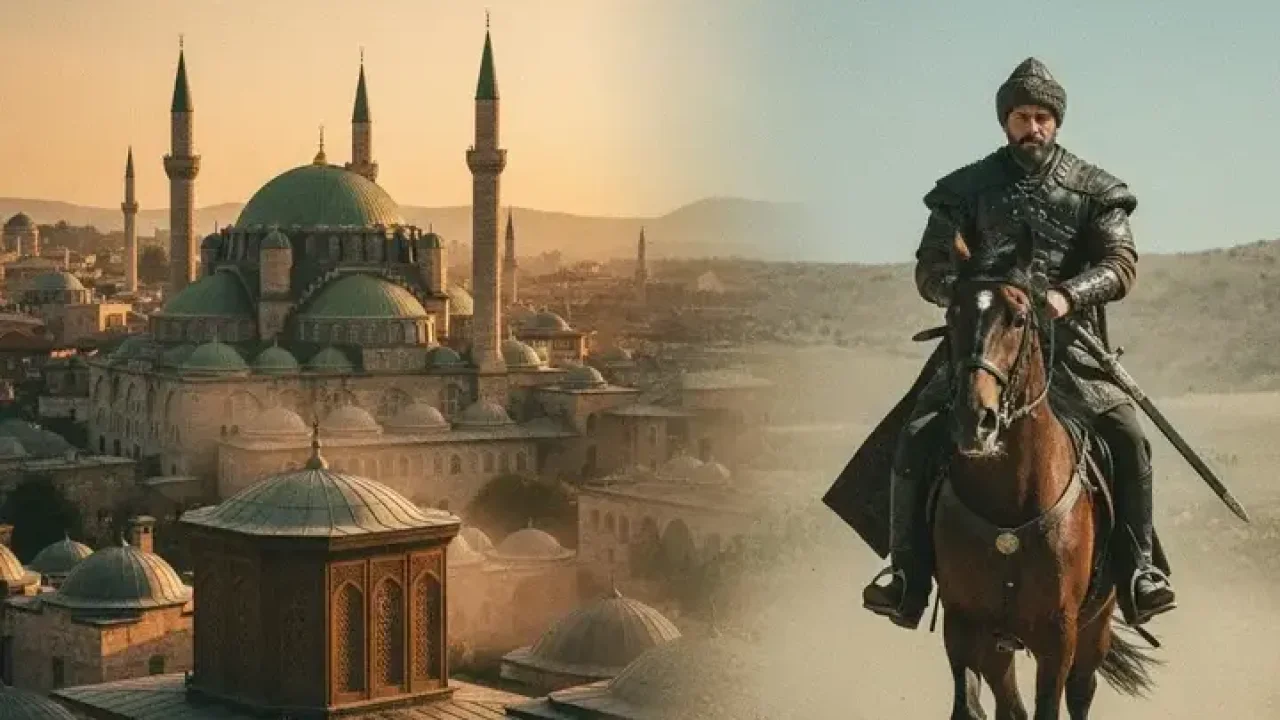
Bursa stands as one of the most strategic, culturally rich, and politically transformative cities in early Anatolian history. Long before the Ottoman Empire expanded into Europe, North Africa, and the Middle East, Bursa became the epicenter of an emerging power that would reshape the world for over six centuries. Its acquisition under Orhan Bey not only consolidated the young Ottoman polity but also laid the foundation for imperial governance, architectural identity, economic prosperity, and geopolitical legitimacy.
Table of Contents
ToggleToday, the legacy of Bursa is frequently highlighted in modern historical discussions, academic research, and even Turkish historical dramas that explore the early Ottoman period. These portrayals continue to draw audiences looking to understand the roots of Ottoman power, especially through resources like historical series with English subtitles. For deeper context on the founding era, viewers can explore Kuruluş Orhan episodes with English subtitles, which give life to the political world surrounding Bursa’s rise.
Historical Origins and Early Importance of Bursa
The Byzantine Stronghold Before the Ottomans
A Fortified City of Critical Value
Before falling to the Ottomans, Bursa was a major Byzantine city known as Prusa. Its strategic placement at the foot of Mount Uludağ, combined with abundant water sources, fertile plains, and proximity to the Marmara coastline, made it a natural fortress. Byzantine administrators fortified Bursa heavily, aware that losing it would open the gateway to the entire Marmara region.
Economic and Agricultural Prosperity
The region was famous for silk production, mineral-rich hot springs, and trade routes connecting İznik, Constantinople, and the Aegean coast. The economic base of Bursa made it a desirable conquest for any emerging Anatolian principality. Silk, in particular, would later become a signature product of Ottoman Bursa, giving rise to the globally renowned Silk Road market of Koza Han.
The Road to Conquest: Osman Bey and Orhan Bey’s Strategy
Osman Bey’s Vision and the Siege Foundations
Realignment of Power in Northwestern Anatolia
During the late 13th century, Byzantine rule in the region weakened due to political fragmentation and external threats. Osman Bey, founder of the Ottoman Beylik, recognized Bursa’s significance early on. By capturing key outposts like Yenişehir, Karacahisar, and İnegöl, he effectively isolated Bursa, preparing the ground for a long-term siege.
Establishing Peripheral Control
Rather than storming the city — a near impossible task against its thick double walls — Osman Bey employed a strategy focusing on controlling the surrounding plains, supply lines, and tactical choke points. His successors would perfect this approach, demonstrating military discipline and a profound understanding of siege warfare.
Orhan Bey and the Final Conquest
The Strategic Masterstroke (1326)
Orhan Bey completed what his father began by launching a sustained and well-coordinated siege. Byzantine resistance weakened, leading to the eventual surrender of Bursa in 1326. This moment marked the first major urban triumph of the Ottoman polity.
Declaring Bursa the First Ottoman Capital
After its conquest, Orhan Bey proclaimed Bursa as the capital of the Ottoman Beylik. This decision was not merely symbolic — Bursa possessed the economic capacity, geographic advantage, and cultural environment needed to support long-term state-building.
Bursa as the First Ottoman Capital: A Civilization Begins
Urban Development and Architectural Identity
Orhan Gazi’s Transformative Building Projects
Orhan Bey initiated a comprehensive urban development program:
- The Orhan Gazi Mosque
- Imarets (public kitchens)
- Medreses (Islamic educational institutions)
- The earliest Ottoman administrative complexes
These structures established the distinctly Ottoman architectural language — a blend of Islamic design, Seljuk influence, and local Anatolian aesthetics.
Birthplace of Imperial Institutions
Bursa became the setting for:
- The first Ottoman mint
- The earliest judicial and administrative offices
- Formation of the imperial waqf system
- Development of the centralized Beylik court structure
These institutions provided a stable foundation for future sultans like Murad I and Bayezid I, enabling rapid expansion into Thrace and the Balkans.
Economic Boom and the Silk Trade
The Rise of Koza Han
Bursa’s transformation accelerated with the growth of silk trade. Koza Han became the center of this booming economy, connecting Ottoman merchants to Persia, Central Asia, and Europe. The wealth generated here supported military expansion, urban development, and palace administration.
A Magnet for Skilled Workers
Bursa attracted craftsmen, scholars, merchants, and architects from across Anatolia and beyond. This cosmopolitan influx deepened the intellectual, cultural, and economic fabric of the city — directly contributing to the rise of Ottoman high culture.
Bursa in the Larger Ottoman Geopolitical Strategy
Gateway to the Balkans
Control of Mountain Passes
Bursa’s surroundings, including the Uludağ passes and the İznik–İzmit corridor, served as natural gateways toward Byzantine Thrace. With Bursa secured, the Ottomans had unrestricted access to northwestern expansion, culminating in their historic crossing into Europe during Orhan Bey’s reign.
Diplomatic Leverage and Regional Dominance
Holding Bursa shifted regional diplomacy dramatically. Neighboring beyliks now viewed the Ottomans as a burgeoning superpower. The Byzantine Empire, increasingly cornered, entered multiple marriage alliances and treaties to contain Ottoman influence.
The Psychological Impact on the Anatolian Frontier
Symbol of Legitimacy
Conquering a fortified Byzantine city granted the Ottomans unparalleled legitimacy. Bursa was not a tribal gain — it was a civilizational conquest marking the birth of a new empire.
Cultural and Religious Identity Formation
The establishment of madrasahs, dervish lodges, and early Ottoman mosques began shaping the Islamic identity of the Ottomans. Scholars from Konya, Tabriz, Egypt, and Bukhara traveled to Bursa, enriching its intellectual environment.
Bursa’s Lasting Legacy in Ottoman Memory and Modern Media
Historical Memory: Tombs of Osman and Orhan
Bursa houses the tombs of Osman Gazi and Orhan Gazi, making it the spiritual heart of Ottoman identity. For centuries, newly crowned sultans visited Bursa to receive blessings, symbolizing unity with their ancestral lineage.
Revival Through Modern Turkish Historical Series
Modern audiences often learn about the rise of Bursa through historical dramas, particularly those depicting Osman Bey and Orhan Bey. To explore these events visually, viewers often search for Kuruluş Orhan with English subtitles, which enables global audiences to follow the early Ottoman political landscape.
You can watch authentic episodes with accurate translations here:
👉 Explore Kuruluş Orhan episodes in English
This connection between modern media and historical scholarship keeps the legacy of Bursa alive for new generations.
Conclusion: Why Bursa Remains the Jewel of Early Ottoman History
Bursa’s role as the first Ottoman capital, its architectural innovations, economic prosperity, and geopolitical significance make it one of the most important cities in Islamic and world history. It served as the intellectual, economic, and political incubator for a dynasty that would dominate three continents.
For viewers, historians, or fans of Turkish historical media wanting to explore this era deeper, Bursa remains central — both in academic research and in popular series dramatizing the life of Orhan Bey.
To explore a dramatized perspective of early Ottoman expansion:
👉 Watch Kuruluş Orhan in English subtitles here