
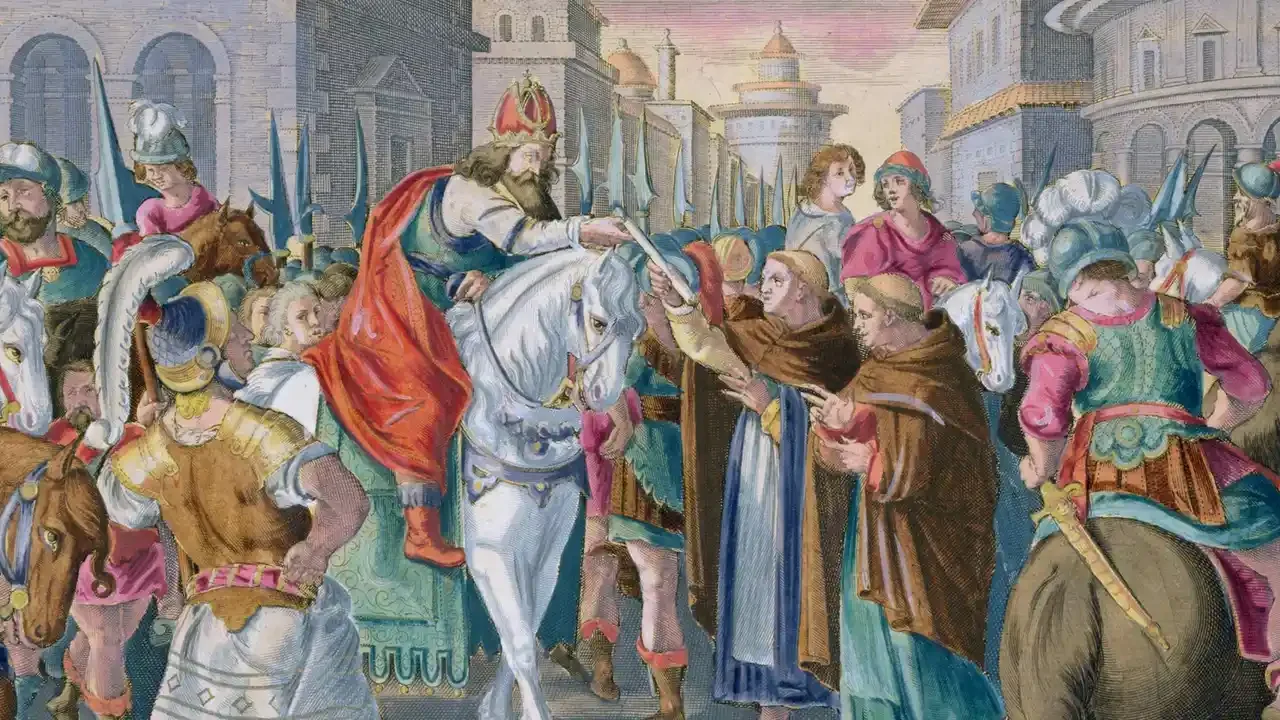
The Enduring Basileia Rhōmaiōn: A Deep Dive into Byzantine Statecraft, Theology, and Military Doctrine
The Byzantine Empire, or the Basileia Rhōmaiōn (Empire of the Romans) as its inhabitants knew it, stands as one of history’s most misunderstood and enduring political entities. Operating from its unrivaled capital, Constantinople (the “New Rome”), for over a millennium (330 AD to 1453 AD), this successor state to the classical Roman Empire synthesized Roman law, Greek intellectualism, and Christian theology into a unique, formidable civilization.
Table of Contents
ToggleThis article moves beyond simplistic narratives of its decline, focusing instead on the sophisticated statecraft, theological foundations, and military resilience that ensured its longevity, providing an authoritative analysis crucial for understanding the complex relationship between the Eastern Roman world and the rising powers of the medieval era, including the Ottomans—a key context explored in series like Kurulus Orhan Season 1 with English Subtitles.
The Synthesis of Sovereignty: Roman Law and Imperial Authority
The essence of Byzantine statecraft lay in its successful adaptation of Roman imperial traditions to the realities of a Greek-speaking, Christianized world. The Emperor, or Basileus, was not merely a secular ruler but God’s vicegerent on Earth, a concept that underpinned the entire administrative and ideological structure of the Empire.
The Immutable Backbone: The Corpus Juris Civilis and its Legacy
The foundation of the Byzantine state’s permanence was its legal system. Justinian I’s monumental codification of Roman law, the Corpus Juris Civilis (529–534 AD), became the definitive legal text. This body of work, comprising the Code, the Digest, the Institutes, and the Novellae, provided an unparalleled framework for administration, commerce, and social order.
Unlike the fragmented legal systems of the medieval West, the Corpus Juris Civilis provided legal continuity and centralization, serving as the ultimate source of authority next to the Emperor himself. Later reforms, such as the Basilika (a 9th-century compilation), reaffirmed the principle that law was a rational, divinely sanctioned instrument of imperial will.
This stability allowed the Byzantine state to manage vast territories and complex bureaucracies efficiently, contributing significantly to its resilience in the face of near-constant military pressure from the Sassanids, Arabs, Slavs, and eventually, the Turks. This sophisticated legal tradition contrasts sharply with the decentralized tribal systems encountered in the emerging Anatolian beyliks, a scenario often dramatized in historical fiction and series like Kurulus Orhan in English Subtitles.
Caesaropapism and the Ecclesiastical Hierarchy
The relationship between the Emperor and the Church defined the Byzantine political landscape. The concept of Caesaropapism—where the Basileus held authority over the Church—ensured that the vast spiritual and material resources of the Orthodox Church were aligned with imperial policy. While the Patriarch of Constantinople held immense theological influence, his appointment and overall policy direction were frequently subject to imperial decree.
This fusion created a highly centralized, theocratic government. The Emperor commanded the army, legislated, and presided over the administration, while simultaneously taking an active role in theological debates (such as the Iconoclasm Controversy and the hesychast disputes). This dual role provided both immense power and immense responsibility. The stability of the Empire often depended on the theological orthodoxy and military success of the reigning Basileus. This integration of church and state was vital for maintaining the internal cohesion necessary for survival.
Theological Foundations and Cultural Transmission
The Byzantine Empire was profoundly shaped by its commitment to Orthodox Christianity. This commitment was not merely a matter of personal faith but a cornerstone of its geopolitical identity, setting it apart from both the Catholic West and the Islamic East.
The Orthodox Identity and the Great Schism (1054)
The definitive schism between the Orthodox Church of Constantinople and the Catholic Church of Rome in 1054 AD was the culmination of centuries of cultural, linguistic, and theological divergence, centered primarily on the nature of Papal supremacy and the Filioque clause. After the schism, the Byzantine Empire became the undisputed protector and primary propagator of Orthodoxy.
This religious identity provided the ideological justification for Byzantine expansion and defense. It fueled the missionary activities that spread Christianity and Byzantine culture (Cyrillic script, art, architecture) to the Slavs, particularly the Bulgars, Serbs, and the Rus’ of Kiev. This cultural legacy, known as the Byzantine Commonwealth, extended the Empire’s influence far beyond its political borders, even as its physical territory began to shrink under sustained pressure.
The Role of Art, Architecture, and Iconography
Byzantine art was not merely decorative; it was a form of theological teaching and propaganda. The mosaic and fresco programs within churches, most famously the Hagia Sophia, were meticulously designed to reflect the cosmic order, with Christ Pantocrator ruling from the main dome, paralleling the Emperor’s rule on Earth.
- Icons: These painted images of Christ, the Virgin Mary, and the Saints were seen as windows to the divine and played a critical role in public and private worship. The tumultuous period of Iconoclasm (the destruction and restoration of icons) illustrates how deeply intertwined religious doctrine and political power were in the Byzantine world. The ultimate restoration of the icons solidified the unique visual and spiritual culture that persisted until the fall of Constantinople.
The Pillars of Persistence: Military Doctrine and Administration
Survival for over a thousand years amidst hostile neighbors—from the Persian Empire and the early Islamic Caliphates to the Normans and Seljuks—was not guaranteed by geography alone. It was a testament to sophisticated military organization and flexible strategic doctrine.
The Thematic System and Provincial Defense
Following devastating losses in the 7th century, the Byzantine state restructured its military and provincial administration by implementing the Theme System (Themata). Under this system, military districts were created, where soldiers (stratiotai) were granted state land in exchange for hereditary military service and reduced taxes.
This system effectively decentralized defense, providing local motivation and manpower. It created a reliable, permanent, professional army deeply invested in the defense of their home region, turning citizens into soldiers. This was an adaptation critical for sustained border defense, especially in Anatolia, the Empire’s most crucial and continuously contested recruiting ground. The Themata provided the backbone of the Byzantine military machine during its resurgence under the Macedonian and Komnenian dynasties.
Strategic Depth and Diplomacy: The Byzantine Arsenal
Byzantine military doctrine often prioritized strategy, logistics, and diplomacy over brute force. The works of emperors like Leo VI (the Tactica) and military treatises like the Synegdemos emphasized:
- Logistics and Fortifications: Relying heavily on impregnable walls (like the Theodosian Walls of Constantinople) and a vast network of fortified cities.
- Attrition and Maneuver: Avoiding decisive pitched battles unless conditions were overwhelmingly favorable. Instead, the Byzantines preferred to delay, harass, and utilize scorched-earth tactics to wear down invading forces.
- Diplomacy (Taxis): Known as the “Imperial Art,” diplomacy was perhaps the most cost-effective weapon. The Byzantines maintained a specialized Department of Barbarians (Skrinion ton Barbaron) to manage diplomatic relations, often using trade agreements, strategic marriages, and aurum (gold subsidies) to play rivals against each other (e.g., diverting Pechenegs against the Kievan Rus, or using the Serbs against the Bulgars). This intricate web of alliances and intelligence-gathering provided strategic depth, delaying the inevitable confrontation with powers like the Seljuks and, later, the burgeoning Ottoman state. Readers interested in the dynamic political and military landscape that led to the foundation of the Ottoman Empire can easily find information by searching for Kurulus Orhan English Subtitles.
The Fatal Fractures: The End of an Empire
Despite its sophistication, the Byzantine Empire ultimately succumbed to a combination of internal strife, economic decay, and overwhelming external pressures, which intensified significantly after the eleventh century.
The Crusader Betrayal and the Fourth Crusade (1204)
The Fourth Crusade represents the single most catastrophic blow to the Empire, arguably more damaging than any defeat at the hands of the Muslims or Slavs. Driven by Venetian commercial interests and a complex web of feudal and dynastic politics, the Crusaders diverted their path and brutally sacked Constantinople in 1204.
The subsequent establishment of the Latin Empire splintered the Byzantine world into successor states (Nicaea, Epirus, Trebizond). While the Empire of Nicaea successfully recaptured Constantinople in 1261, the restored Palaiologos dynasty presided over a fragmented, economically ruined state that never regained its former power or territory. This political fragmentation left the Empire highly vulnerable to the relentless pressure exerted by the emerging Turkish powers in Anatolia.
The Rise of the Ottomans and the Final Siege
The final centuries were dominated by the struggle against the Ottoman Sultanate. Beginning as a small beylik in western Anatolia, the Ottomans systematically absorbed the Empire’s former territories in both Asia Minor and the Balkans. Despite occasional flashes of imperial resilience, such as during the reign of Manuel II Palaiologos, the Byzantine state became a geographical island within the growing Ottoman realm, politically and financially dependent on the often-indifferent West.
The ultimate conclusion arrived in 1453. Sultan Mehmed II, recognizing the strategic and symbolic value of the city, laid siege to Constantinople with a massive army and artillery. The fall of the city on May 29, 1453, marked the end of the Basileia Rhōmaiōn and the definitive close of the medieval period. The conquest transformed the ancient city into the new capital of a global Islamic empire, an epochal shift whose dramatic historical context is detailed in many sources and is a key backdrop to the events shown in Mehmed Fetihler Sultanı with English Subtitles .
Conclusion: The Enduring Legacy of Byzantium
The Byzantine Empire was far more than a decaying appendage of Rome; it was a powerful, unique, and profoundly influential civilization. Its contribution to world history is immeasurable: the preservation of classical Greek literature and philosophy, the codification of Roman law, the propagation of Orthodox Christianity, and the development of sophisticated statecraft and diplomacy.
Byzantium acted as a thousand-year shield for Western Europe, bearing the brunt of successive invasions from the East, allowing the Latin West the time and space necessary for its own development. The sophisticated political and military structures that defined the Eastern Roman world were ultimately overwhelmed, yet the impact of the Basileia Rhōmaiōn persists today—in the churches of Eastern Europe, the legal codes of modern states, and the eternal strategic importance of its former capital.
To fully appreciate the monumental historical forces at play during the rise of the Ottoman state, which ultimately inherited this legacy, one must understand the complex, intriguing history of the Byzantine Empire. A deeper understanding of this transition and its players can enhance the viewing experience of historical dramas and documentaries alike. You can explore the narrative of the successor powers further by visiting Kurulus orhan and Mehmed Fetihler Sultanı Series with English Subtitles.