
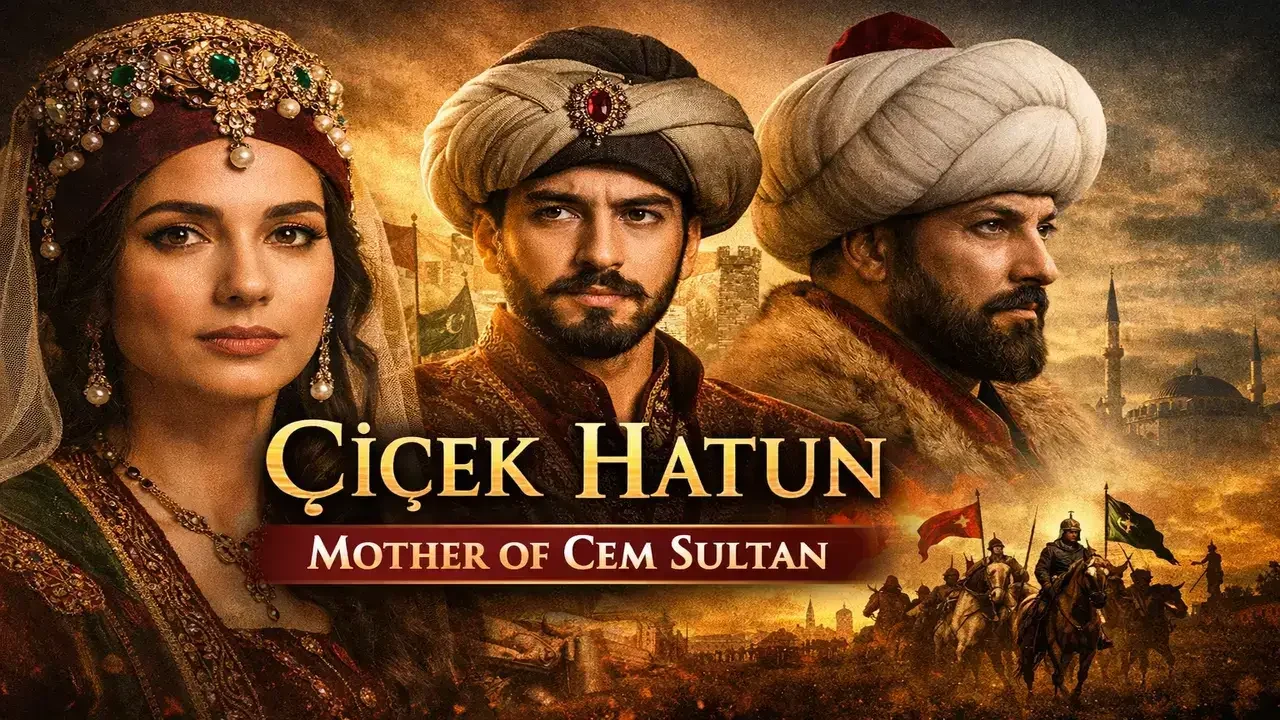
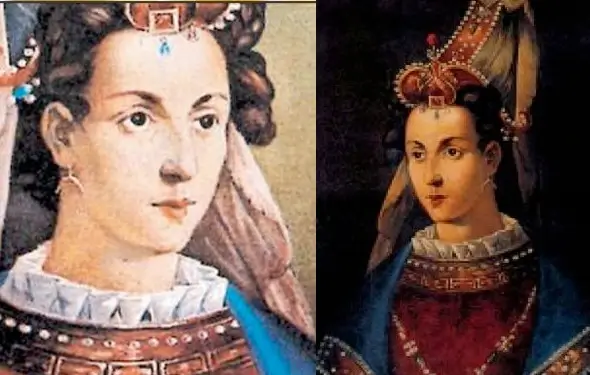
Introduction: Why Çiçek Hatun Still Matters
In Ottoman history, some women shaped imperial destiny without ruling from the throne. Çiçek Hatun stands among them. Known primarily as a consort of Sultan Mehmed II, she was also the mother of Cem Sultan, a prince whose struggle for succession shook Europe and the Ottoman court alike.
Who Was Çiçek Hatun?
Çiçek Hatun was a 15th-century Ottoman consort, remembered most clearly as the mother of Cem Sultan. Unlike later imperial consorts whose lives are richly documented, her biography survives in fragments—court records, endowment notes, and chronicles written by Ottoman historians.
What we do know is significant:
- She held the respected title Hatun, reserved for elite women of the imperial household
- She gave birth to Cem Sultan, a legitimate Ottoman prince
- Her position placed her at the center of one of the most dramatic succession crises in Ottoman history
In Ottoman society, motherhood of a şehzade (prince) elevated a woman’s influence dramatically. From that moment, Çiçek Hatun was no longer just a consort—she became a political figure.
Origins and Background: Balkan or Byzantine Roots?
Ottoman sources do not unanimously record Çiçek Hatun’s birthplace. However, most historians agree on one point: she was not Turkish by birth.
Scholarly consensus suggests:
- Balkan or Byzantine origin
- Possibly from a Christian noble family before entering the Ottoman court
- Converted to Islam, as was customary for women entering the imperial harem
Such marriages were not romantic accidents. They were strategic alliances, strengthening Ottoman influence in newly conquered or diplomatically sensitive regions.
Marriage to Sultan Mehmed II
By the mid-15th century, Sultan Mehmed II—already famous for conquering Constantinople (1453)—used marriage as a tool of statecraft. His union with Çiçek Hatun followed this pattern.
Although she was not the chief consort, her status changed permanently after giving birth to Cem Sultan. In Ottoman hierarchy:
A prince’s mother outranked childless consorts.
This principle explains why Çiçek Hatun retained importance even after Mehmed II’s later marriages.
Mother of Cem Sultan: A Defining Role
If history remembers Çiçek Hatun, it is largely because of Cem Sultan.
Who Was Cem Sultan?
- Son of Sultan Mehmed II
- Educated, multilingual, and politically ambitious
- Main rival to Bayezid II after Mehmed’s death (1481)
After the sultan’s death, the empire split:
- Bayezid II seized Istanbul
- Cem Sultan, backed by regional governors and foreign powers, challenged his brother’s rule
This rivalry led Cem into exile—first in Anatolia, then Rhodes, France, and finally Italy—turning him into a diplomatic pawn between the Ottomans and European monarchies.
For Çiçek Hatun, this meant:
- Separation from her son
- Loss of political security
- A legacy forever tied to tragedy and ambition
Life Inside the Ottoman Harem
Contrary to popular myths, the Ottoman harem was a political institution, not merely a private residence.
As the mother of a prince, Çiçek Hatun would have:
- Managed her son’s household
- Overseen tutors, guards, and servants
- Maintained correspondence with provincial governors
Her influence depended on her son’s fortunes—and when Cem Sultan lost the succession battle, her power diminished accordingly.
Death and Burial
Historical records indicate that Çiçek Hatun died before Cem Sultan’s death in 1495.
While her exact burial place remains debated, most Ottoman historians agree:
- She was buried in Anatolia, not Europe
- Her tomb did not receive later imperial restoration, contributing to her obscurity
Yet absence of grandeur does not equal absence of importance.
Çiçek Hatun in Modern Culture
Interest in Ottoman women has surged due to historical TV dramas. Characters inspired by figures like Çiçek Hatun appear in productions exploring Mehmed II’s reign.
If you are following the historical drama Mehmed Fetihler Sultanı, you can watch the series with English subtitles on kurulusOrhan.io, where episodes are presented for international audiences interested in accurate Ottoman history.
These portrayals, while dramatized, have revived global curiosity about lesser-known women of the empire.
Historical Importance: Why Historians Still Study Her
From an E-E-A-T perspective, Çiçek Hatun’s significance rests on three pillars:
- Dynastic Motherhood – She gave birth to a legitimate Ottoman prince
- Political Consequence – Her son’s rivalry reshaped Ottoman-European relations
- Cultural Insight – Her life reflects the role of non-Turkish women in Ottoman governance
As one Ottoman chronicler noted:
“The fate of empires is often carried in the cradles of princes.”
Legacy in Ottoman History
While Çiçek Hatun never ruled, her legacy endured through:
- The international crisis surrounding Cem Sultan
- Diplomatic payments made by Bayezid II to keep Cem imprisoned in Europe
- European fascination with Ottoman internal politics
In this sense, Çiçek Hatun influenced not only Ottoman history—but European diplomacy as well.
Conclusion
Çiçek Hatun represents the many Ottoman women whose power flowed through motherhood, loyalty, and survival rather than crowns. Her life connects the conquest era of Mehmed the Conqueror to one of the empire’s most dramatic succession struggles.
For readers seeking authentic Ottoman history beyond myths, her story offers depth, realism, and historical truth.
FAQs
Who was Çiçek Hatun in Ottoman history?
Çiçek Hatun was an Ottoman consort of Sultan Mehmed II and the mother of Cem Sultan. She gained historical importance through her son’s claim to the throne, which triggered a major succession crisis influencing Ottoman politics and European diplomacy in the late fifteenth century.
Was Çiçek Hatun the legal wife of Sultan Mehmed II?
Çiçek Hatun is described in Ottoman records as a consort rather than a formal queen. In Ottoman tradition, status and legitimacy came from bearing a prince, not ceremonial marriage, which explains her influence through motherhood instead of official royal titles.
What was Çiçek Hatun’s ethnic or regional origin?
Most historians believe Çiçek Hatun originated from the Balkans or Byzantine territories. Like many women entering the Ottoman court, she likely converted to Islam, reflecting the empire’s practice of integrating diverse backgrounds into the ruling elite during the fifteenth century.
Why is Çiçek Hatun important in Ottoman succession history?
Çiçek Hatun is historically important because her son, Cem Sultan, contested the Ottoman throne against Bayezid II. This rivalry led to Cem’s exile across Europe, turning an internal succession dispute into a long-running diplomatic issue between the Ottomans and Christian powers.
Is Çiçek Hatun shown in the TV series Mehmed Fetihler Sultanı?
Although Mehmed Fetihler Sultanı is a dramatized television series, characters inspired by women like Çiçek Hatun reflect her historical era and influence. Viewers can watch the series with English subtitles on kurulusOrhan.io, increasing global accessibility and broader interest in Ottoman history worldwide.