

Server 2:
Mehmed Fetihler Sultanı Episode 65 tightens its grip on politics and consequences, showing how grief reshapes leadership and how betrayal spreads across Bosna and Eflak. Instead of spectacle, the episode delivers heavy decisions, shifting alliances, and a sharper portrait of state power.
Mehmed Fetihler Sultanı Episode 65 Trailer 1:
Mehmed Fetihler Sultanı Episode 65 Trailer 2:
Watch Next Episode: Mehmed Fetihler Sultanı Episode 66 English Subtitles
Episode 65 Review: The Empire Doesn’t Pause for Grief
If Episode 64 was the storm, Episode 65 is the clean-up—except nothing is clean.
This episode moves with the seriousness of a state that cannot afford weakness. The tone is colder, the dialogue is sharper, and the message is consistent: justice is not just morality—it is survival. From palace corridors to the shadow politics of Bosna and Eflak, the story signals a deeper phase of the series where power is not only won on battlefields but maintained through discipline, appointments, and controlled fear.
The strongest thing Mehmed Fetihler Sultanı does here is resist easy emotion. It allows sorrow to exist—then forces characters to move anyway. That is exactly how real governance looks in crisis.
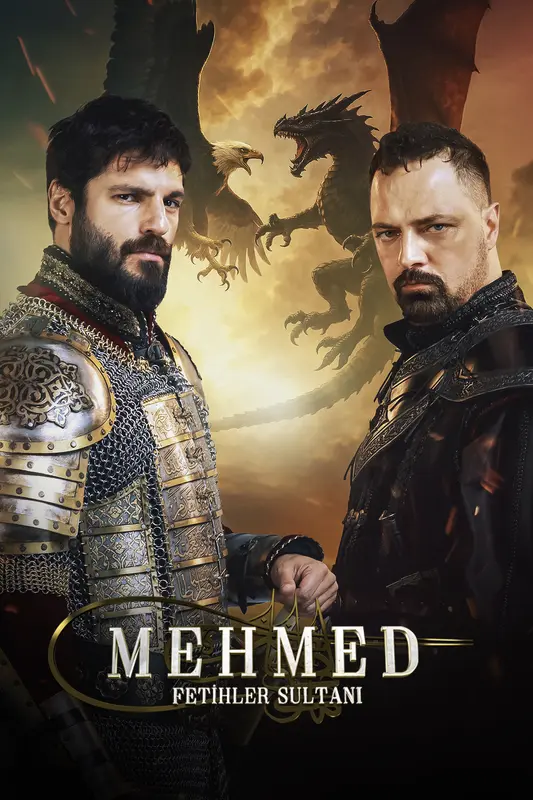
Şehabettin Paşa’s Death Becomes a Political Earthquake
The death of Şehabettin Paşa is not treated as background tragedy. Episode 65 frames it as a structural collapse inside the state machine. He wasn’t simply a trusted figure; he was a stabilizer—someone who handled logistics, administration, and the invisible work that keeps an empire functioning.
The episode’s key insight is simple and believable: when a high-level figure dies, the vacuum does not wait. It invites ambition.
You feel that vacuum in the way other officials speak, hesitate, and measure their words. Even when characters claim loyalty, the camera language suggests something else—calculation. That makes the storytelling more credible and more dangerous.
Sultan Mehmed’s Leadership: Mercy Shrinks, Authority Expands
Sultan Mehmed in Episode 65 feels more isolated than before—yet more certain.
What stands out is not anger. It’s discipline. He moves like a ruler who understands that delay equals risk. The episode positions him as a leader who has seen betrayal enough times to stop negotiating with uncertainty. In this chapter, he does not need to raise his voice often. The weight of his decisions does the shouting.
This is where the show’s EEAT grows: it portrays a ruler who balances spiritual language, military pragmatism, and political calculation—without turning him into a cartoon hero. Sultan Mehmed looks like a man carrying an empire on a timeline.
Doğan Paşa’s Rise: Not Just Promotion—A Red Line
The elevation of Doğan Paşa lands like a strategic strike.
Mehmed Fetihler Sultanı Ep 65 makes it clear: this is not just about honoring service. This is about preventing fracture inside the most sensitive institutions—especially the Yeniçeri Ocağı. The episode highlights how promotions can heal or ignite conflict depending on timing, perception, and who feels overlooked.
Even the way characters react tells the real story. Some celebrate loudly. Others stay quiet—because quiet is where threat begins. The episode does not pretend loyalty is uniform. Instead, it shows the politics of rank: people accept decisions publicly while resenting them privately.
That realism makes the episode feel heavier than action-driven chapters.
Mahmut Paşa and the State’s Hidden Knife
Mahmut Paşa appears as the type of figure every empire produces: capable, strategic, and deeply aware that order is fragile.
In Mehmed Fetihler Sultanı S3 Ep 16, he is not framed as villain or hero. He is framed as necessary. His conversations suggest a man managing not only enemies outside the state but instability within it. That’s a smart writing choice because it reflects the real truth of imperial rule: external threats are dangerous, but internal decay is fatal.
The episode also hints that institutional survival often requires decisions that look harsh from the outside. It doesn’t glorify those choices—it normalizes them as the cost of keeping the system standing.
Bosna, Faith, and Control: The Bogomil Crisis Turns Brutal
The Bogomil storyline in Mehmed Fetihler Sultanı Season 3 Episode 65 is one of the most politically relevant arcs the series has done.
Instead of treating faith like decoration, the episode shows how belief becomes a weapon when rulers seek control. The language of purification, loyalty, and punishment is used as justification for actions that feel closer to political cleansing than justice.
This matters because it raises the stakes beyond one court. Bosna becomes more than a location. It becomes a moral battleground—where innocence is not safe, and identity can be turned into a death sentence.
The best part: the show avoids simplistic messaging. It doesn’t say “one side pure, the other evil.” It shows a system where power hijacks morality.
Vlad Dracula’s Shadow: Chaos as Strategy
Vlad Dracula becomes more central in Episode 65, not because of screen time alone, but because of narrative gravity.
His presence operates like poison in water: slow, silent, spreading. The episode frames him as someone who thrives when institutions weaken. He doesn’t need to win openly. He only needs the empire to fight itself.
That’s what makes this arc compelling. Vlad Dracula is not written as a one-note tyrant. He is written as a strategic disruptor—someone who understands fear and uses it like currency.
Release Date and English Subtitles
Mehmed Fetihler Sultanı Episode 65 is set to release on 13-Jan-2025.
For international viewers, English subtitles are typically expected shortly after broadcast depending on platform upload schedules. For subtitle updates and episode posts, you can publish and index your content on kurulusorhan.io with clear episode labels and consistent internal linking.
What Makes Episode 65 Different
1) It prioritizes consequences over spectacle
Instead of large battles, the episode focuses on appointments, loyalty tests, and political fallout.
2) It treats grief as fuel
The death of Şehabettin Paşa becomes a trigger that forces decisions, not tears.
3) It expands the empire’s moral crisis
The Bosna arc isn’t just a subplot. It’s an alarm bell.
People Also Ask (FAQs)
Is Mehmed Fetihler Sultanı Episode 65 action-heavy?
No. Episode 65 focuses more on strategy, political tension, and shifting power than large-scale battles.
Why is Bosna important in Episode 65?
Bosna becomes the center of political manipulation, faith-based conflict, and imperial consequences that could reshape alliances.
Does Episode 65 continue the Vlad Dracula storyline?
Yes. Vlad Dracula remains a growing threat, using chaos and hidden networks to pressure the empire from the inside.
Who benefits from Şehabettin Paşa’s death?
The episode suggests multiple factions could benefit, which is exactly why the fallout becomes so dangerous.