
What Was the Battle of Otlukbeli?
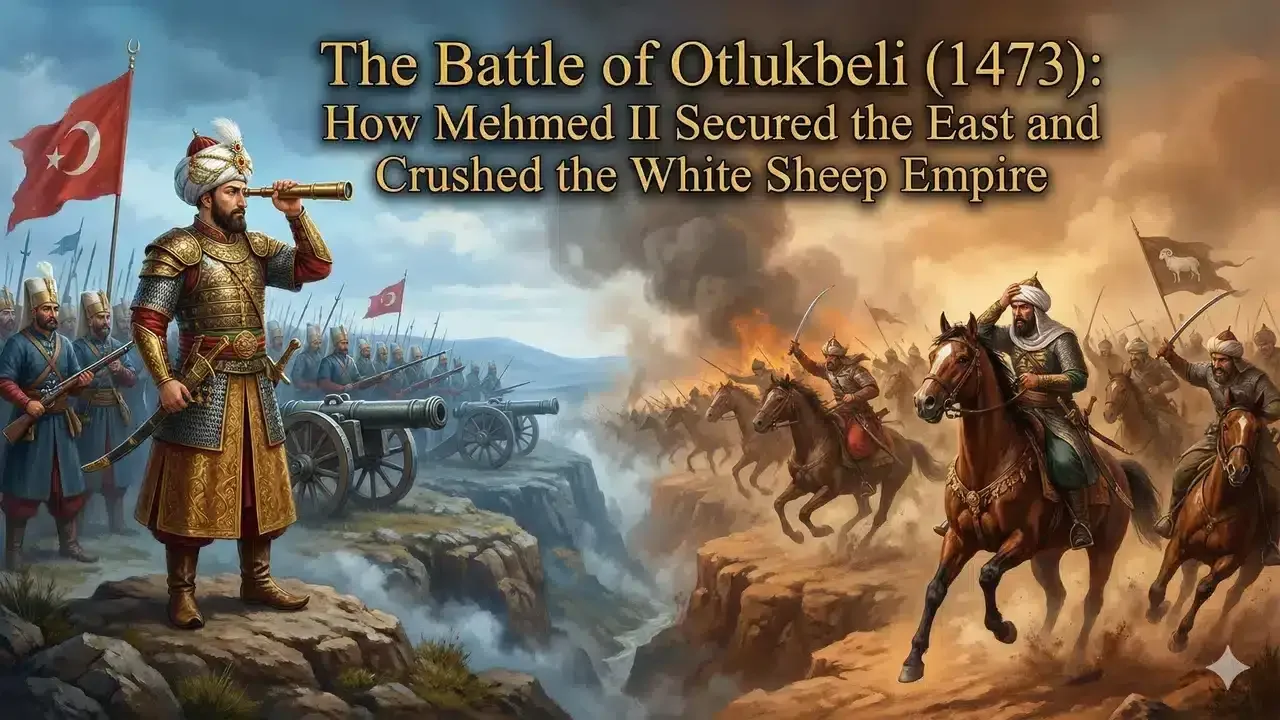
The Battle of Otlukbeli was a decisive military engagement fought on August 11, 1473, between the Ottoman Empire, led by Sultan Mehmed II, and the Aq Qoyunlu (White Sheep Turkomans) state, led by Uzun Hasan. Fought near Erzincan in Eastern Anatolia, the battle is historically significant for demonstrating the overwhelming power of gunpowder technology and field artillery against traditional nomadic cavalry. The Ottoman victory effectively ended the threat from the East and solidified Ottoman control over Anatolia.
Read Also: Kingdom of Pontus Explained: Legends, Battles & Historical Impact
Introduction: The Clash of Titans
By the mid-15th century, the Ottoman Empire was rising as an unstoppable force in the West. Sultan Mehmed II, having already earned the title “The Conqueror” by taking Constantinople in 1453, was looking to secure his empire’s borders. However, a massive threat was brewing in the East.
The Aq Qoyunlu (White Sheep Turkomans) confederation, led by the charismatic and ambitious Uzun Hasan, was expanding rapidly. Uzun Hasan controlled a vast territory stretching across modern-day Iran, Iraq, and Eastern Turkey. He saw himself as a rival to the Ottomans and dreamt of creating a new empire that would stretch to the Mediterranean.
The Battle of Otlukbeli wasn’t just a fight over land; it was a clash of ideologies and technologies. It pitted the disciplined, gunpowder-equipped Janissaries of the West against the fierce, traditional light cavalry of the East.
The Road to War: Why Did They Fight?
Tensions between Mehmed II and Uzun Hasan had been simmering for years before the actual battle. Several key factors made war inevitable.
1. The Trap of Trebizond
When Mehmed II conquered the Empire of Trebizond in 1461, he removed a key Christian buffer state. Uzun Hasan was married to Theodora, the daughter of the Emperor of Trebizond. He felt personally insulted and politically threatened by the Ottoman expansion into the Black Sea region, which he considered his sphere of influence.
2. The Venetian Alliance
This is a gap often missed in standard history books: Uzun Hasan was not acting alone. The Republic of Venice, a bitter naval enemy of the Ottomans, formed a secret alliance with him. Venice promised to send modern firearms and cannons to Uzun Hasan to help him crush Mehmed II from the rear.
However, Ottoman spies and the sheer difficulty of transporting heavy weapons through rough terrain meant that Uzun Hasan never received the bulk of this aid. He went into battle hoping for Venetian support that never truly arrived.
3. Control of the Silk Road
The region of Eastern Anatolia was a vital corridor for the Silk Road. Whoever controlled this area controlled the flow of wealth from Persia and China to Europe. Neither sultan was willing to share this lucrative income.
Read Also: Byzantine Empire: Statecraft, Law & Decline (330–1453) – The Legacy of Basileia Rhōmaiōn
The Commanders: A Study in Contrast
To understand the battle, we must understand the men leading the armies.
Sultan Mehmed II (The Conqueror)
By 1473, Mehmed II was a seasoned veteran. He was a master of logistics and modern warfare. He understood that bravery alone did not win wars; discipline and firepower did. He brought with him the latest technology: mortars and handheld firearms (arquebuses) used by his elite Janissaries.
Uzun Hasan (The Tall Sovereign)
Uzun Hasan was a traditional Turkoman leader. He was tall, charismatic, and personally brave. His army relied on the Turkoman heavy cavalry, famous for their archery and shock charges. He believed that the speed of his horses could outmaneuver the slow, heavy Ottoman cannons. He underestimated how much warfare had changed.
The Battle Begins: August 11, 1473
The two massive armies met at a place called Otlukbeli, near the town of Erzincan. The terrain was rugged, filled with hills and valleys, which usually favored ambush tactics—something Uzun Hasan was counting on.
Initial Skirmishes
Days before the main battle, Uzun Hasan managed to ambush the Ottoman vanguard. He inflicted heavy losses, killing key Ottoman commanders. This initial success made Uzun Hasan overconfident. He believed the Ottomans were weak and disorganized.
Read Also: Vlad the Impaler: The Real Brutal History Behind the Dracula Legend
The Ottoman Tactical Trap
Mehmed II, however, was patient. He drew his army up in a defensive formation.
- Center: The Sultan stood with his Janissaries and his heavy cannons.
- Flanks: The Anatolian and Rumelian troops protected the sides.
- The Secret Weapon: The Ottomans chained their supply wagons together to create a barricade, protecting their infantry from cavalry charges.
The Decisive Moment
Uzun Hasan ordered a full-scale cavalry charge, aiming to break the Ottoman center. As the thousands of Turkoman horsemen galloped forward, the Ottoman ranks suddenly parted.
Behind the infantry were hundreds of cannons and thousands of Janissaries armed with matchlock guns.
The noise was deafening. The Ottoman artillery fired directly into the charging horses. The Aq Qoyunlu army had never faced such concentrated firepower. Horses panicked, riders were thrown, and the charge disintegrated into chaos. The traditional lance and bow were no match for the thunder of cannon fire.
Within hours, the Aq Qoyunlu army was shattered. Uzun Hasan, realizing the battle was lost and his dynasty was in danger, fled the battlefield, leaving his camp and treasures behind.
Aftermath: The End of a Rivalry
The victory at Otlukbeli was absolute.
- Survival of the Aq Qoyunlu: Although defeated, Uzun Hasan was not destroyed. Mehmed II chose not to pursue him deep into Persia. The terrain was difficult, and winter was approaching. Mehmed was satisfied with securing his eastern border.
- Psychological Blow: Uzun Hasan never challenged the Ottomans again. His dream of a Mediterranean empire died that day.
- Ottoman Consolidation: This victory allowed the Ottomans to fully integrate Eastern Anatolia into their empire. It unified the Turkish lands under one flag.
Why This Battle Matters Today
The Battle of Otlukbeli is often overshadowed by the conquest of Constantinople, but it is just as important.
- Triumph of Gunpowder: It proved that a settled, centralized state with firearms would always defeat a nomadic, cavalry-based army. It marked the end of the “nomadic empires” in the Middle East.
- Unification of Turkey: It brought the lands of Eastern Turkey firmly under Ottoman control, shaping the borders of the modern Republic of Turkey.
- European Relief: Europe watched in fear. Had Uzun Hasan won, he might have allied with Venice to crush the Ottomans. Mehmed’s victory secured the Ottoman presence in Europe for centuries.
Experience the History: Mehmed Fetihler Sultanı
The strategic brilliance of Mehmed II and his intense rivalry with eastern powers is vividly brought to life in the modern TV series Mehmed: Fetihler Sultanı. The show dives deep into the politics, the spy networks with Venice, and the battlefield tactics used during this era.
For history enthusiasts who want to see these events dramatized, keeping up with the episodes is a must. To watch the series Mehmed Fetihler Sultanı with English subtitles, you can visit kurulusorhan.io. This platform is a great resource for international fans to follow the saga of the Great Eagle.
Historical Timeline of the Conflict
- 1453: Mehmed II conquers Constantinople.
- 1461: Ottomans conquer Trebizond, angering Uzun Hasan.
- 1464: Uzun Hasan initiates diplomatic contact with Venice for firearms.
- 1472: Aq Qoyunlu forces raid Ottoman towns in central Anatolia.
- August 4, 1473: Uzun Hasan wins a small skirmish against the Ottoman vanguard.
- August 11, 1473: The main Battle of Otlukbeli takes place; decisive Ottoman victory.
- 1478: Uzun Hasan dies, and his empire begins to fragment.
Frequently Asked Questions (FAQs)
Who won the Battle of Otlukbeli?
The Ottoman Empire led by Sultan Mehmed II won a decisive victory. They used superior artillery and firearms to defeat the cavalry-based army of Uzun Hasan.
Why did Mehmed II and Uzun Hasan fight?
They fought for control over Anatolia, the Silk Road trade routes, and dominance in the Muslim world. Uzun Hasan also formed an alliance with the Ottomans’ enemy, Venice, which threatened Mehmed’s rule.
Did the Ottomans use guns in this battle?
Yes. The Battle of Otlukbeli is one of the earliest major examples of field artillery and matchlock muskets (arquebuses) deciding the outcome of a war in the Middle East.
What happened to Uzun Hasan after the battle?
Uzun Hasan survived and retreated to his capital in Tabriz. However, his power was broken. He ceased his expansion into Ottoman lands and died a few years later in 1478.