
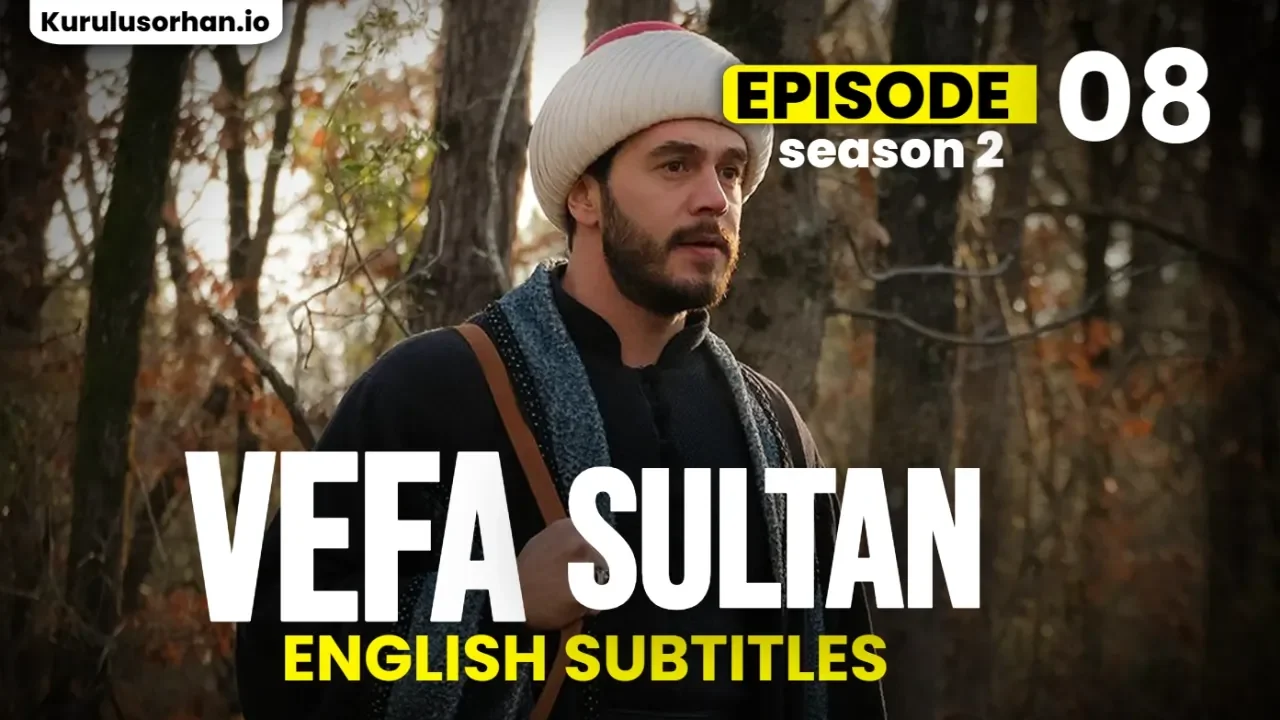
Vefa Sultan Episode 38 English Subtitles presents a deeply emotional chapter where Hüseyin confronts his inner struggles, Ali faces rejection in love, and Vefa Sultan teaches patience and perseverance after betrayal. The episode highlights repentance, resilience, and the true meaning of spiritual discipline.
Table of Contents
ToggleWatch Previews Episode: Vefa Sultan Episode 37 English Subtitles
A City Tested: Ottoman Istanbul Under Strain
In Ottoman Istanbul, moral trials rarely arrive alone. Episode 38 of Vefa Sultan unfolds in an atmosphere of tension, heartbreak, and reflection. The physical damage to the bostan is not merely agricultural loss—it symbolizes spiritual erosion.
The attack on the fields hints at deeper motives. The land belongs under the authority of Sultan Mehmet, and any act of plunder carries political undertones. This is not random theft. It carries resentment, perhaps revenge.
Yet as always, the response from Vefa Sultan Episode 38 is not rage—it is resolve.
“Allah stands with those who begin again.”
This line defines the episode’s direction.
Hüseyin’s Collapse and the Meaning of Repentance
Hüseyin reaches his lowest point in Vefa Sultan Episode 38. Crushed by guilt, he believes he has destroyed both himself and the trust placed in him. His emotional breakdown becomes one of the most powerful scenes in the series so far.
But here lies the spiritual core of the episode.
Vefa Sultan reminds him that failure and success are both whispers of the ego. What matters is surrender.
Hüseyin learns that dervishhood is not about wearing the cloak. It is about carrying a state of being. The hırka represents responsibility, not costume.
This distinction changes everything.
In classic Sufi tradition, outward symbols mean nothing without inward transformation. The episode beautifully reflects this teaching, consistent with Ottoman spiritual heritage dating back to scholars like Aziz Mahmud Hudayi and the moral framework shaped by Mehmed the Conqueror’s era.
Hüseyin’s repentance is not dramatic. It is painful. And that makes it real.
Ali’s Proposal Rejected: Wealth vs. Character
Parallel to Hüseyin’s struggle runs another emotional storyline.
Ali, once a student and now a respected müderris of Devlet-i Aliye, seeks Elif’s hand in marriage. His credentials are strong. His character is sound. His future appears bright.
But Elif’s father, Süleyman Efendi, sees only financial status.
In one of the episode’s sharpest dialogues, he dismisses virtue in favor of wealth. He wants a merchant son-in-law, not a scholar.
This conflict exposes a timeless social tension: material comfort versus moral value.
The scene resonates deeply in modern times. It questions what truly builds a household—gold ornaments or shared principles?
Vefa Sultan’s circle believes love, modesty, and Sunnah-based simplicity bring barakah. Süleyman Efendi believes prosperity guarantees peace.
Episode 38 does not resolve this conflict. It deepens it.
The Lesson of the Rotten Apple
One early metaphor sets the thematic foundation.
A rotten apple must be separated from the healthy ones—not because it harms itself, but because it spreads decay.
The message is subtle yet powerful.
Goodness and evil both spread. Companionship shapes destiny.
This theme reflects classical Islamic scholarship and aligns with hadith teachings about influence and environment. The moral decay in the city mirrors the spoiled fruit.
The question becomes clear: Who will influence whom?
Dervishhood Beyond the Dergah
One of the episode’s strongest spiritual teachings comes when Hüseyin is told that dervishhood is not confined to the lodge.
“Dervishhood is the art of being with God among people.”
This teaching expands the narrative beyond ritual worship. True discipline happens in markets, workshops, and streets.
Hüseyin is sent to work under Idris Usta, learning humility through craft. The needle and thread become metaphors for mending the soul.
This reflects Ottoman guild traditions, where craftsmanship and spirituality walked hand in hand. Work was worship when intention was pure.
The transformation will not happen through isolation. It will happen through service.
Love as Fire: Ali’s Inner Trial
Ali’s heartbreak intensifies.
He compares his state to Prophet Yusuf, yet he is reminded that not everyone emerges from the well as Yusuf did.
This symbolic reference adds depth without dramatization. Love, in this narrative, is not romance alone—it is purification.
Ali must burn before he can rise.
There is talk of his future potential—even becoming a great jurist, perhaps a Sheikh al-Islam. But the episode suggests something important:
Ambition without inner stability collapses under emotional strain.
Love is not a distraction. It is a test.
Sabır vs. Passive Acceptance
After the destruction of the bostan, Vefa Sultan delivers a defining sermon.
Patience is not passive acceptance.
True sabır means striving despite hardship.
If they simply sit and accept loss, they are not patient—they are resigned. But if they rebuild, plant again, and work harder, that is sabır.
This distinction aligns with authentic Islamic jurisprudence and ethical teachings.
Action defines faith.
Episode 38 elevates this principle beyond theory.
Political Undercurrents
The stolen goods subplot suggests strategic targeting. The criminals aim to sell the produce away from central oversight, avoiding the ears of the capital.
This subtle detail hints at organized manipulation rather than petty crime.
In the time of Sultan Mehmet, loyalty to state authority carried spiritual weight. The attack on Vefa’s land could signal opposition forces testing boundaries.
While Episode 38 focuses on spiritual growth, it quietly builds tension for broader political consequences.
Timeline of Key Developments in Episode 38
Early Episode – The rotten apple lesson introduces moral contagion.
Mid Episode – Hüseyin breaks down and confronts his ego.
Marriage Proposal Scene – Ali is rejected on economic grounds.
Workshop Transition – Hüseyin begins practical spiritual training.
Final Sermon – Sabır redefined as active rebuilding.
This structured progression moves from metaphor to crisis to resolution.
Unique Angle: The Psychology of Ego in Spiritual Garb
What sets Episode 38 apart from other Ottoman dramas is its psychological nuance.
The ego can disguise itself as worship.
A person may pray, serve, or even repent—yet still feed pride.
Vefa Sultan identifies this subtle trap.
Modern audiences rarely see this depth in historical series. This internal battle adds realism and maturity to the narrative.
Where to Watch
International viewers seeking Vefa Sultan Episode 38 English Subtitles can find professionally translated versions on Kurulusorhan.io, known for accurate timing and contextual translations tailored for global audiences.
People Also Ask (FAQs)
Where can I watch Vefa Sultan Episode 38 with English subtitles?
You can stream it with reliable English subtitles on Kurulusorhan.io, which provides high-quality translations for international viewers.
What is the main theme of Episode 38?
The episode centers on repentance, active patience, and the struggle between ego and sincerity.
Does Ali marry Elif in Episode 38?
No. His proposal is rejected due to financial concerns, deepening his emotional trial.
Does Hüseyin leave the dervish path?
No. Instead, he learns that true dervishhood requires humility, service, and inner transformation.