
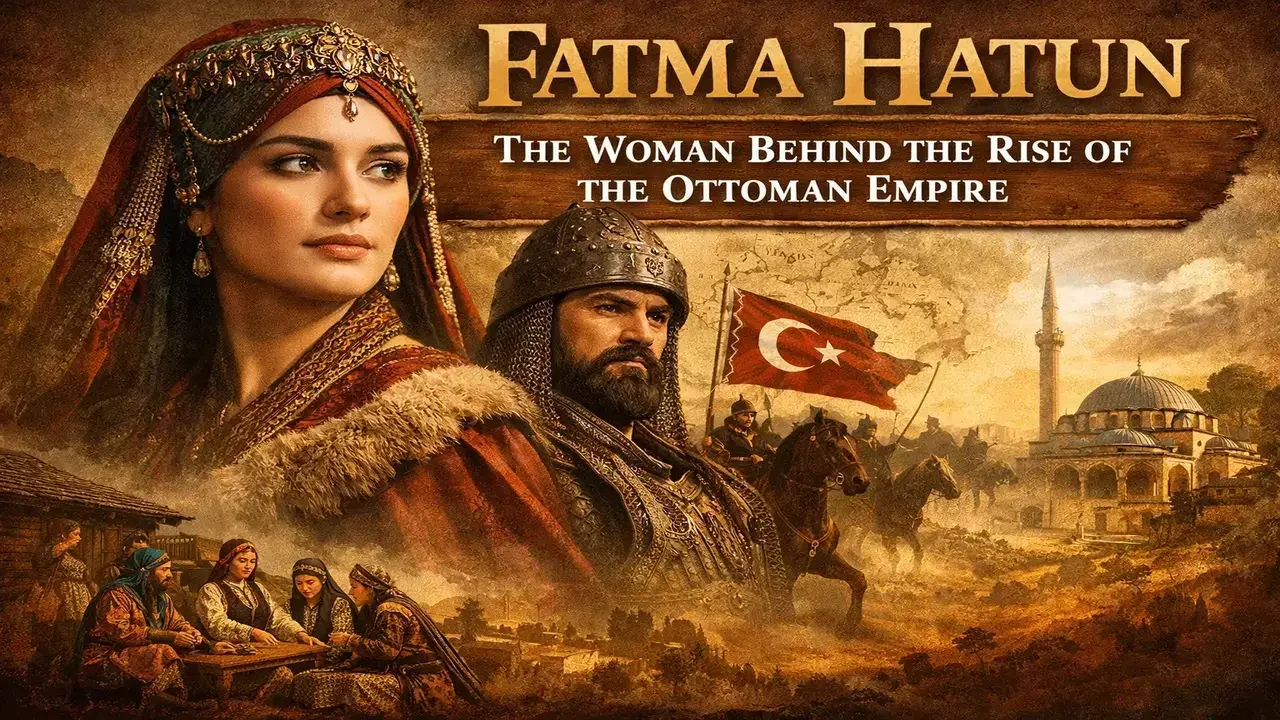
Fatma Hatun, the daughter of Osman Ghazi, represents the overlooked female authority of the early Ottoman era. Though absent from battlefields, her influence shaped tribal stability, moral order, and the social foundations that allowed the Ottoman state to rise and endure.
Table of Contents
ToggleIntroduction: Why Fatma Hatun Still Matters
The story of the Ottoman Empire is often told through swords, conquests, and male leadership. Yet behind every expanding frontier stood women who preserved order, faith, and unity. Among them, Fatma, daughter of Osman Ghazi, holds a quiet but deeply influential place in history.
Unlike legendary warriors, Fatma did not command armies. Her power was cultural, spiritual, and social—anchoring the values that allowed a nomadic frontier tribe to evolve into a lasting state. In an era defined by instability, her presence symbolized continuity, legitimacy, and moral authority.
Who Was Fatma Hatun?
Historical Identity and Lineage
Fatma was born into the ruling household of the Kayı tribe, the daughter of Osman Ghazi, founder of the Ottoman dynasty. Her mother is commonly associated in tradition with Malhun Hatun, though historical sources vary due to limited documentation of women in early Anatolian chronicles.
As a member of the founding family, Fatma Hatun held symbolic importance. In Turkic-Islamic culture, daughters of rulers often played key roles in alliance-building, tribal mediation, and preservation of dynastic honor.
Women’s Authority in Early Ottoman Society
Beyond the Battlefield
Early Ottoman society did not marginalize women as passive figures. Women like Fatma Hatun participated in:
- Tribal governance and mediation
- Religious and moral instruction
- Preservation of lineage legitimacy
- Social welfare within the tribe
These roles were essential during the fragile transition from nomadic life to statehood.
Connection to Bacıyan-ı Rum
Many historians associate elite women of the era with the spirit of Bacıyan-ı Rum (Sisters of Anatolia), a semi-organized network of women engaged in charity, education, and moral leadership. While Fatma is not directly documented as a formal member, her status and upbringing strongly align with this tradition.
Fatma Hatun’s Strategic Importance
Dynastic Stability
In early Turkic states, daughters of leaders were living symbols of legitimacy. Fatma strengthened:
- Internal unity within the Kayı tribe
- Loyalty among allied clans
- Moral authority of Osman Ghazi’s rule
Her existence reinforced the perception of the Ottoman household as divinely favored and socially ordered.
Marriage and Alliance Context
Although historical records remain silent on her marriage, Ottoman princesses were often used to secure alliances through strategic unions. Even in absence of clear documentation, her role would have been carefully managed to protect the dynasty’s interests.
Why History Is Quiet About Fatma Hatun
The Problem of Medieval Sources
Women’s lives were rarely recorded unless they ruled directly or funded major institutions. Chroniclers focused on wars, treaties, and male rulers. This silence does not indicate insignificance—it reflects historiographical bias.
Modern scholarship increasingly recognizes that figures like Fatma formed the social glue of early Islamic states.
Fatma Hatun in Modern Popular Culture
Representation in Kuruluş Orhan
Contemporary Turkish historical dramas have reignited interest in early Ottoman women. In Kuruluş Orhan, female characters inspired by real figures like Fatma are portrayed as intelligent, principled, and politically aware.
These portrayals align more closely with historical realities than older stereotypes, emphasizing emotional intelligence and moral leadership rather than combat.
👉 Watch Kurulus Orhan With English Subtitles on Kurulusorhan.io — a trusted platform for international viewers exploring Ottoman history through drama.
Historical Timeline: Fatma Hatun in Context
- c. 1280s – Birth of Fatma Hatun during the formative years of the Kayı tribe
- 1299 – Declaration of Ottoman independence under Osman Ghazi
- Early 1300s – Consolidation of tribal governance and Islamic identity
- Post-1300 – Expansion under Orhan Ghazi, shaped by values preserved by women of the founding household
This period highlights how non-military leadership sustained long-term political success.
Unique Angle: Power Without Visibility
Most historical narratives equate power with visibility. Fatma Hatun’s influence challenges that assumption. Her authority operated through:
- Cultural continuity
- Ethical reinforcement
- Intergenerational stability
Empires do not survive on conquest alone. They endure through values, education, and social trust—domains where women like Fatma Hatun were indispensable.
Lessons from Fatma Hatun for Modern Readers
- Leadership is not limited to titles or battlefields
- Cultural foundations outlast military victories
- Women have always shaped political history, even when unrecorded
Understanding Fatma Hatun reshapes how we read Ottoman origins—not as a tale of swords alone, but as a balanced system of power.
People Also Ask (FAQs)
Q1: Was Fatma Hatun a real historical figure?
Yes. Fatma Hatun is recognized as the daughter of Osman Ghazi, though detailed records about her life are limited.
Q2: Did Fatma Hatun rule or fight in battles?
No. Her influence was social and cultural, not military, which was typical for elite women of the era.
Q3: Is Fatma Hatun shown in Kuruluş Orhan?
The series portrays characters inspired by historical women like Fatma Hatun, emphasizing moral strength and political awareness.
Q4: Why is Fatma Hatun important to Ottoman history?
She represents the foundational role women played in stabilizing the early Ottoman state.