
Imam Ghazali Episode 3 English Subtitles

Imam Ghazali Episode 3 with English subtitles focuses on his early academic struggles, exposure to diverse ideologies, and the beginning of his spiritual questioning. It highlights the intellectual environment of Nishapur and introduces the tensions between philosophy, theology, and faith. Introduction: Why Episode 3 Matters More Than You Think The rising interest in historical Islamic series has pushed Imam Ghazali Episode 3 English Subtitles into global attention. This episode goes beyond storytelling—it explores the intellectual formation of one of Islam’s most influential scholars, Imam Al-Ghazali. In my analysis, Episode 3 is where the narrative shifts from biography to transformation. It begins to show how a young student evolves into a thinker who would later challenge entire philosophical traditions. The Historical Setting Behind Episode 3 The City of Nishapur Imam Ghazali Episode 3 is deeply rooted in Nishapur, one of the most important intellectual centers of the 11th century. Historical records indicate that Nishapur was a hub for: This environment shaped Al-Ghazali’s thinking. It exposed him to conflicting schools of thought, forcing him to question inherited beliefs. The Role of His Teacher Imam al-Juwayni – The Mentor Who Shaped Him A central figure introduced in this phase is Imam al-Juwayni, also known as Imam al-Haramayn. Based on available evidence, Juwayni was one of the leading theologians of the Ash‘ari school. His influence on Ghazali was profound: But here’s the part most viewers miss:Juwayni didn’t just teach answers—he taught Ghazali how to question. That intellectual independence becomes dangerous later. Check Also Intellectual Conflict: Philosophy vs Faith Exposure to Greek Philosophy Imam Ghazali Episode 3 subtly introduces Ghazali’s interaction with ideas derived from Aristotle and Plato. This is not accidental storytelling. During the 11th century, Muslim scholars were deeply engaged with Greek philosophical works translated into Arabic. Ghazali’s exposure to these ideas created a tension: In my analysis, Imam Ghazali Episode 3 plants the seeds of what would later become his famous critique of philosophy in Tahafut al-Falasifa. The Beginning of a Spiritual Crisis One of the most important developments in Episode 3 is internal—not external. Ghazali begins to question: This aligns with historical accounts from his autobiographical work Al-Munqidh min al-Dalal (Deliverance from Error). Unlike typical historical dramas, this series captures something rare:the psychology of doubt in a scholar. And that’s where the real story begins. Timeline of Events in Episode 3 Phase Key Development Early Study Arrival in Nishapur and formal education begins Mentorship Studies under Imam al-Juwayni Exposure Encounters philosophical ideas Conflict Begins questioning certainty of knowledge Turning Point Internal struggle between intellect and faith Real-World Application: Why This Episode Still Matters Today Most viewers treat this as history. That’s a mistake. Episode 3 reflects a problem still relevant today: Information overload without clarity. In modern terms: Ghazali’s journey offers a framework: This is why his legacy still influences modern Islamic thought, philosophy, and even psychology. Where to Watch Imam Ghazali Episode 3 English Subtitles To watch Imam Ghazali Episode 3 English Subtitles, viewers typically look for: Ensure the platform provides accurate English translations, as poor subtitles distort the intellectual depth of the dialogue. Unique Insight Most Articles Miss Here’s the uncomfortable truth: Most content treats Ghazali as a “religious hero.” That’s intellectually lazy. Episode 3 shows something far more important:He was deeply uncertain. And that uncertainty—not blind faith—made him العظيم. This directly contradicts the simplified narratives often pushed in media. People Also Ask (FAQs) 1. What is the main focus of Imam Ghazali Episode 3? It focuses on his early education in Nishapur, his exposure to philosophy, and the beginning of his intellectual and spiritual questioning. 2. Is Imam Ghazali Episode 3 historically accurate? Based on available evidence, the episode aligns with major historical accounts, though some dramatization is expected. 3. Why is Nishapur important in Ghazali’s life? Nishapur was a major center of learning where he studied under top scholars and encountered diverse ideologies. 4. Does Episode 3 show his spiritual crisis? Yes, it introduces the early stages of the internal conflict that later defines his transformation. Conclusion: What You Should Do Next Episode 3 is not just another chapter—it’s the foundation of everything that follows. If you’re watching casually, you’ll miss it.If you’re paying attention, you’ll see the birth of a revolutionary thinker. Next step:Watch the episode again—but this time, focus on the questions, not the answers.
Watch Imam Ghazali Episode 2 English Subtitles (Full Episode HD)

Imam Ghazali Episode 2 English Subtitles continues the early journey of Imam Al-Ghazali, focusing on his deepening pursuit of knowledge, the challenges of formal education, and the growing tension between intellectual ambition and spiritual awareness. Quick Episode Info What Happens in Episode 2? Episode 2 builds directly on the foundation of Episode 1 and begins to expand the world around Imam Ghazali. Key developments include: This episode moves from introduction → direction. Why Episode 2 Is Important This is where the story starts to take shape. If Episode 1 was the spark, Episode 2 is the formation of the path. Key Moments You Shouldn’t Miss These moments are not loud—but they matter. Check Also: Watch Full Episode Now 👉 Stream Imam Ghazali Episode 2 with English Subtitles here: Themes Explored Episode 2 dives deeper into: These themes are the backbone of Imam Al-Ghazali’s life story. Viewing Experience & Subtitles The episode continues the series’ focus on intellectual storytelling over action. Final Thoughts Imam Ghazali Episode 2 English Subtitles is not about big events—it’s about deep progression. It strengthens the foundation laid in Episode 1 and begins shaping the mind of a scholar who will later challenge the entire intellectual world around him. If you’re following the series seriously, this episode is essential. FAQs Where can I watch Imam Ghazali Episode 2 with English subtitles? You can stream the full episode in HD on Kurulusorhan.io. Is Episode 2 slow-paced? Yes, but intentionally. It focuses on intellectual development and character growth. Do I need to watch Episode 1 first? Yes. Episode 2 directly continues the story and builds on earlier events. What is the main focus of Episode 2? The episode focuses on education, intellectual growth, and early internal conflict.
Watch Vefa Sultan Episode 51 English Subtitles (Full Episode HD)

Vefa Sultan Episode 51 English Subtitles delivers a critical turning point in the series, highlighting rising political tension, strategic conflicts, and emotional struggles. The episode focuses on key decisions that reshape alliances and set the stage for major upcoming events, making it essential viewing for anyone following the story. Quick Episode Info What Happens in Episode 51? Vefa Sultan Episode 51 (English Subtitles) pushes the story into a critical phase where tensions between power, loyalty, and destiny reach their peak. This episode focuses on: This is not a filler episode—it’s a shift in direction. Why This Episode Matters By Episode 51, the story is no longer about introduction—it’s about consequences. Every decision now: The writers are clearly building toward a larger confrontation, and this episode acts as a bridge between tension and action. Key Moments You Shouldn’t Miss Miss these, and you miss the entire direction of the story. Watch Full Episode Now 👉 Stream Vefa Sultan Episode 51 with English Subtitles here: Themes Explored in Episode 51 This episode goes beyond surface drama and explores: That’s why the pacing may feel intense—it’s not about action, it’s about decisions that shape outcomes. Subtitle & Viewing Experience The episode maintains consistency in production quality, making it easy for international viewers to follow. Final Thoughts Vefa Sultan Episode 51 (English Subtitles) is a setup-heavy but essential episode. It doesn’t rely on spectacle—it builds tension. And if you’ve followed the series so far, you already know: 👉 The calm episodes are usually followed by chaos. FAQs Where can I watch Vefa Sultan Episode 51 with English subtitles? You can stream the full episode in HD using the watch links provided above. Is Episode 51 important to the story? Yes. It plays a key role in setting up future conflicts and character decisions. Is this episode action-packed? Not heavily. It focuses more on strategy, dialogue, and tension-building. Do I need to watch previous episodes? Yes. This episode builds on previous storylines, so context matters.
Watch Imam Gazali Episode 1 English Subtitles (Full Episode HD)

Imam Gazali Episode 1 (English Subtitle) introduces the early life of the legendary Islamic scholar Imam Abu Hamid Al-Ghazali, portraying his childhood, thirst for knowledge, and the social and political climate of the 11th century. The episode sets the foundation for his spiritual and intellectual transformation. Quick Episode Info Check Related Series: Kurulus Orhan Series With English Subtitles What Happens in Episode 1? Imam Gazali Season 1 Episode 1 (English Subtitle) introduces the early life of Imam Al-Ghazali, one of the most influential scholars in Islamic history. The episode focuses on: This is not just a beginning—it’s the foundation of a journey that will reshape Islamic philosophy and spirituality. The Historical Setting: The Seljuk Era The story unfolds during the powerful Seljuk Empire, a time when knowledge, politics, and religion were deeply intertwined. Born in 1058 in Tus, Imam Al-Ghazali grew up in a world where: Imam Gazali Episode 1 carefully builds this environment, helping you understand the forces that shaped his early life. Why This Episode Is Worth Watching Most historical series rely on action. This one doesn’t. Instead, Episode 1 delivers: You’re not just watching events—you’re watching the formation of a mind that would later challenge philosophers, scholars, and entire schools of thought. Key Moments You Shouldn’t Miss These moments are small—but they carry massive weight for what’s coming next. Watch Full Episode 👉 Stream Imam Gazali Season 1 Episode 1 with English Subtitles here: Why This Story Still Matters Today The journey of Imam Al-Ghazali is not just historical—it’s deeply relevant. In today’s world: This episode reminds you of something most people ignore: 👉 Real knowledge requires struggle, discipline, and sincerity. That’s what makes this series different—and powerful. Cinematic Quality & Subtitle Experience The pacing is slower than typical dramas—but that’s intentional. It reflects the seriousness of the subject. Final Thoughts Imam Gazali Season 1 Episode 1 (English Subtitle) is not trying to entertain you in a shallow way. It’s building something deeper. It introduces a young boy who would later become known as Hujjat al-Islam—but here, he is still searching, questioning, and learning. And that’s exactly why this first episode matters. FAQs Where can I watch Imam Gazali Episode 1 with English subtitles? You can stream the full episode in HD on Kurulusorhan.io using the links above. Is Imam Gazali series historically accurate? Yes, it is based on the life of Imam Al-Ghazali, though some scenes are dramatized for storytelling. Is this episode slow-paced? Yes—but intentionally. It focuses on intellectual and emotional depth rather than action. Who was Imam Al-Ghazali? A Persian Islamic scholar, theologian, and philosopher who shaped Islamic thought for centuries.
Mehmed Fetihler Sultanı Episode 76 English Subtitles
Today we are going to talk about Mehmed Fetihler Sultanı Episode 76… If you’ve been following Mehmed Fetihler Sultanı, then you already know the story has reached a very intense stage. With every episode, Sultan Mehmed moves closer to shaping not just a victory — but a lasting empire. Mehmed Fetihler Sultanı Episode 76 looks like it could be one of those episodes where the direction of the story begins to shift. Before we go deeper, one important thing:this episode has not officially aired yet, so everything discussed here is based on trailer hints, previous developments, and historical context — not confirmed events. If you missed the previous episode, you can read our full breakdown of Mehmed Fetihler Sultanı Episode 75 to understand the current situation better. Feature Details Series Name Mehmed: Fetihler Sultanı (Sultan of Conquests) Episode Number 76 Release Date April 14, 2026 (Tuesday) Main Lead Serkan Çayoğlu (Sultan Mehmed) Current Focus Belgrad Campaign preparations & Internal Court Politics Key Antagonists Vlad Tepeş (The Impaler) & External Secret Alliances Language Turkish (Official), English Subtitles (available later) Official Broadcaster TRT 1 Where to Watch Kurulusorhan.io / Kurulusfamily.com 👉 Mehmed Fetihler Sultanı Episode 75 English Subtitles Release Date & Where to Watch Mehmed Fetihler Sultanı Episode 76 is expected to release on: 📆 April 14, 2026 After release, you can watch it with English subtitles on: 👉 Kurulusorhan.io — fast episode uploads with HD streaming👉 Kurulusfamily.com — structured content, guides, and episode access In most cases, English subtitles become available within a few hours after the episode airs. Source 1: source 2: Download Now What to Expect in Episode 76 Now let’s talk about what we can realistically expect from this episode. The Pressure on Sultan Mehmed Is Growing Sultan Mehmed is now dealing with more than just battles — he is carrying the responsibility of leadership. In Mehmed Fetihler Sultanı Episode 76, we may see: This phase of the story focuses more on thinking like a ruler than fighting like a warrior. To better understand Sultan Mehmed’s vision, it also helps to explore who he was in real history and how his leadership shaped the Ottoman Empire. 👉 Who was Sultan Mehmed in real history. A Major Strategic Move Could Be Coming Recent developments suggest that Mehmed may be preparing for something significant. This could involve: These are the moments that define history. Internal Conflicts May Intensify Not all threats come from outside. Sometimes the real danger is within. Mehmed Fetihler Sultanı Episode 76 might explore: These internal tensions often shape the future more than open battles. 👉 Fall of Constantinople explained. External Enemies Are Still Active Even when things seem under control, enemies are always watching. We can expect: The tension is clearly building toward something bigger. Why Episode 76 Matters This episode feels like a transition point. We are moving toward: In simple words, the story is shifting from action to strategy — and that’s where things get truly interesting. Frequently Asked Questions (FAQs) Q1: Where can I watch Mehmed Fetihler Sultanı Episode 76 with English subtitles? You can watch it on Kurulusorhan.io for fast streaming or explore Kurulusfamily.com for structured access and updates. Q2: Has Episode 76 officially been released? No, it is expected to release on April 14, 2026. Q3: Is the Episode 76 storyline confirmed? No, the details are based on trailer insights and previous episodes. Q4: Will Episode 76 be important? Yes, it is expected to be a key episode that builds toward major future developments. Final Thoughts If you ask me honestly, Mehmed Fetihler Sultanı Episode 76 feels like more than just another episode — it feels like a setup for something much bigger. The story is evolving, the stakes are rising, and every decision now carries weight. So if you’ve been following Sultan Mehmed’s journey, this is definitely not an episode you want to miss.
Watch Kurulus Orhan Episode 22 English Subtitles (Full Episode HD)
Today we are going to talk about Kurulus Orhan Episode 22… If you’ve been following this series closely, then you already know — things are getting intense with every episode. The story is no longer just about battles; it’s now about power, strategy, and the foundation of an empire. Kurulus Orhan Episode 22 is shaping up to be one of those episodes where everything starts to shift. But before we go deeper, let me be clear about one thing:this episode has not officially aired yet, so everything we’re discussing here is based on trailer hints, previous episodes, and historical context — not confirmed events. If you missed the previous episode, read our full recap of Episode 21. Kurulus Orhan Episode 22 – Quick Overview Feature Details Series Name Kurulus Orhan (The Foundation of a State) Episode Number 22 Release Date April 29, 2026 (Wednesday) Main Lead Orhan Bey (Son of Osman Ghazi) Key Focus State-building, Political Alliances & Leadership Evolution Current Conflict Internal Tribe Loyalties vs. External Strategic Threats Language Turkish (Official) / English & Urdu Subtitles (Online) Streaming Sites Kurulusorhan.io Historical Context The Rise of the Second Ottoman Sultan Release Date & Where to Watch Kurulus Orhan Episode 22 is expected to release on: Release Date: April 22, 2026 You can watch it with English subtitles on: 👉 Kurulusorhan.io (HD quality with fast subtitle updates) and Kurulusfamily.com. Usually, subtitles become available within a few hours after the episode airs, so you won’t have to wait long. Update: Due to a Turkish Cup match, Episode 22 of Kurulus Orhan will now air on April 29. Watch Also: Kurulus Orhan Episode 23 English Subtitles Server 1: Server 2: Download Now What to Expect in Episode 22 Now let’s get into the real question — what can we actually expect from this episode? Orhan Bey’s Leadership Is Evolving In the previous episodes, we’ve clearly seen a shift in Orhan Bey’s character. He is no longer just a battlefield warrior — he is slowly becoming a strategic leader. In Kurulus Orhan Episode 22, we may see: This transition is important because it marks the beginning of a new phase in the story. To understand the character dynamics better, you can also explore the history of Orhan Bey. Who was Orhan Bey in real history. A Possible Political Marriage Twist Based on historical references and subtle hints from recent developments, there is a strong possibility that a political marriage storyline could emerge. This wouldn’t be about romance — it would be about: And of course, such a decision could create emotional tension within the palace, especially among key characters. Rising Internal Conflicts Every strong state faces internal challenges — and this story is no different. Kurulus Orhan Episode 22 may highlight: These internal struggles often become more dangerous than external enemies. External Threats Are Far From Over Even if temporary peace is achieved, the enemies are still watching. We can expect: The tension is building toward something bigger — and Episode 22 might be the setup for a major confrontation. Why Kurulus Orhan Episode 22 Matters This episode is important not just because of what happens, but because of what it represents. It feels like a transition point where: In simple words, this is where the story starts thinking beyond survival. Frequently Asked Questions (FAQs) Q1: Where can I watch Kurulus Orhan Episode 22 with English subtitles? You can watch it on Kurulusorhan.io with high-quality English subtitles shortly after release. Q2: Has Episode 22 officially been released? No, at the time of writing, the episode is expected but not yet officially released. Q3: Is the storyline confirmed? No. The details shared here are based on trailer analysis, previous episodes, and historical references. Q4: Will Episode 22 be important for the story? Yes, it is expected to be a key transitional episode that sets up future developments. Final Thoughts If you ask me honestly, Kurulus Orhan Episode 22 looks like more than just another episode — it feels like a setup for something much bigger. We’re moving from simple conflicts to deeper strategies, from individual battles to long-term vision. And that’s exactly what makes this episode worth watching. So if you’ve been following the journey so far, this is not the episode you want to miss.
Constantinople: How the Legendary City Shaped Empires for 1,000+ Years
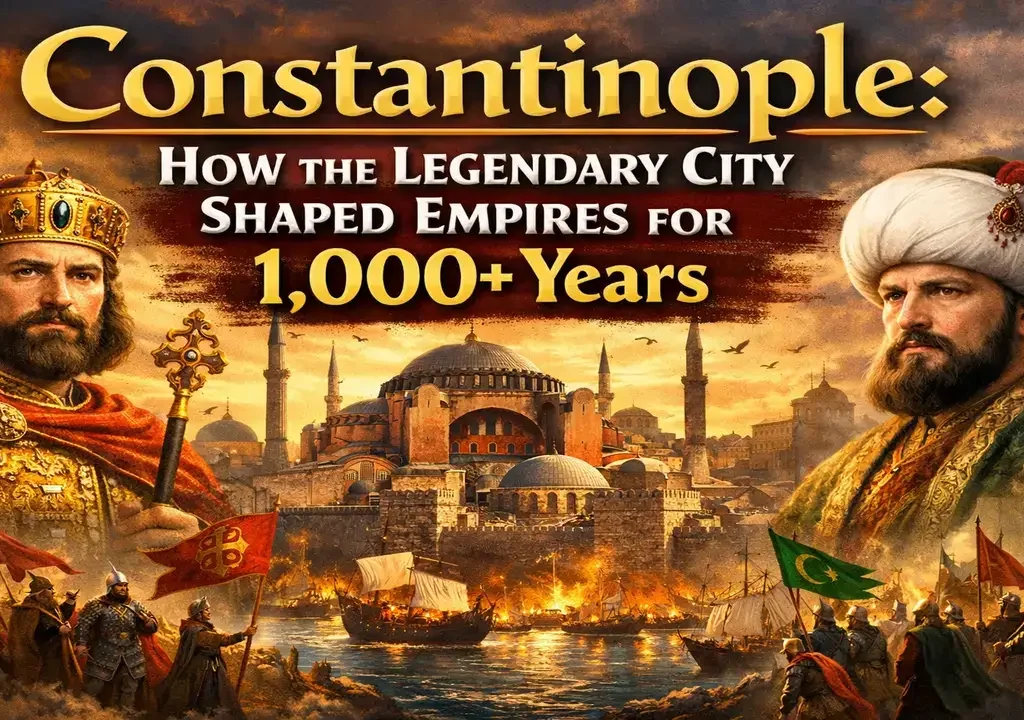
Constantinople was the capital of the Eastern Roman (Byzantine) Empire for over 1,100 years. Founded by Emperor Constantine I in 330 AD on the site of ancient Byzantium, the city controlled the strategic Bosphorus Strait and served as a crossroads between Europe and Asia until its conquest by the Ottomans in 1453. Why Constantinople Still Matters Some cities belong to a single era. Constantinople belonged to all of them. For more than a millennium, it was the largest, wealthiest, and most strategically vital city in the Western world. It outlived the Roman Empire that built it. It survived dozens of sieges. It shaped Christianity, influenced Islamic architecture, and defined medieval geopolitics in ways that still echo through modern borders. When it finally fell on a spring morning in 1453, the shockwaves reached every court in Europe within weeks. Yet most people today know surprisingly little about what made Constantinople extraordinary — beyond the fact that it eventually became Istanbul. The real story is far stranger, more dramatic, and more layered than any summary can capture. From Byzantium to Nova Roma The city’s origins long predate the Roman Empire. Greek colonists from Megara founded a settlement called Byzantium around 657 BC, choosing a rocky peninsula where the Golden Horn inlet meets the Bosphorus — a narrow waterway separating Europe from Asia Minor. It was a fisherman’s paradise and a trader’s dream. Whoever controlled this point controlled the only sea route between the Mediterranean and the Black Sea. For centuries, Byzantium remained a modest but strategically useful city, passing between Greek, Persian, and eventually Roman hands. It was Emperor Constantine I who transformed it entirely. In 324 AD, after defeating his rival Licinius in battle nearby, Constantine chose Byzantium as the site for a grand new capital. He expanded the city dramatically, built monumental forums and palaces, and inaugurated it on May 11, 330 AD as Nova Roma — New Rome. The name never stuck with ordinary people. They called it Constantinople, the city of Constantine. And so it remained. The Walls That Defied the World No discussion of Constantinople makes sense without understanding its defenses. The city was, in military terms, a nightmare to attack. On three sides, water protected it — the Sea of Marmara to the south, the Bosphorus to the east, and the Golden Horn to the north. A massive chain could be stretched across the Golden Horn’s entrance, blocking enemy fleets entirely. The land approach from the west was guarded by the legendary Theodosian Walls, constructed under Emperor Theodosius II in the early 5th century. These weren’t just walls — they were a layered defensive system: a deep moat, an outer wall, a killing ground, and then the towering inner wall studded with nearly 100 towers. For a thousand years, no army breached them by force alone. This is a fact worth pausing on. A thousand years. No other fortification in history held that record. A City of Faith and Spectacle Constantinople wasn’t just a fortress. It was a cultural capital of staggering ambition. Hagia Sophia Emperor Justinian I commissioned the Hagia Sophia in 532 AD, and it was completed in just five years — an engineering marvel whose massive dome seemed to float on light. For nearly a millennium, it was the largest cathedral in the world. When Justinian first entered the finished building, he reportedly whispered, “Solomon, I have surpassed thee.” Whether he actually said it or not, the sentiment was accurate. The Hippodrome The Hippodrome was the city’s beating social heart — a chariot-racing stadium that seated roughly 100,000 spectators. It was also politically dangerous. The Nika Riots of 532 AD, which began as a dispute between racing factions, nearly toppled Justinian’s government and left much of the city in ashes. The emperor considered fleeing. It was Empress Theodora who reportedly shamed him into staying, declaring she would rather die in imperial purple than run. Libraries, Trade, and Scholarship Constantinople preserved vast quantities of Greek and Roman knowledge that would have otherwise been lost. Its libraries, monasteries, and scriptoria kept classical texts alive through the centuries when Western Europe had largely forgotten them. Scholars fleeing the city after 1453 carried manuscripts to Italy, directly fueling the Renaissance. The city was also one of the medieval world’s great commercial hubs. Silk, spices, grain, gold, and enslaved people moved through its markets. Venetian and Genoese merchants maintained entire trading quarters within the city — a privilege they sometimes exploited and Constantinople sometimes regretted. The Sieges: A City Under Constant Pressure Constantinople’s strategic value made it a perpetual target. The Ottoman Rise and the Road to 1453 By the 14th century, the Byzantine Empire had shrunk to a shadow of itself — little more than Constantinople and a few scattered territories. Meanwhile, a new power was rising in Anatolia. The early Ottoman beylik, established by Osman I in the late 1200s, expanded steadily under his successors. His son Orhan Gazi captured Bursa in 1326, making it the first major Ottoman capital, and later took Nicaea (modern İznik) and crossed into Europe. These early campaigns laid the groundwork for everything that followed. By the time Sultan Mehmed II turned his attention to Constantinople in 1453, the Ottomans already controlled virtually everything around it. The city was an island in an Ottoman sea. The Fall: May 29, 1453 Mehmed II, just 21 years old, assembled an army of roughly 80,000 troops and a fleet of over 120 ships. He also brought something unprecedented: massive cannons, including the enormous bombard cast by a Hungarian engineer named Orban, capable of hurling stone balls weighing over half a ton. The Byzantine emperor, Constantine XI Palaiologos, had fewer than 10,000 defenders — including a contingent of Genoese soldiers under Giovanni Giustiniani. The siege lasted 53 days. Ottoman engineers dragged ships overland on greased logs to bypass the chain across the Golden Horn. The great cannons slowly crumbled sections of the Theodosian Walls. On the morning of May 29, Ottoman forces broke through. Constantine XI died fighting, reportedly charging into the final melee. His body was never conclusively identified. Mehmed entered the city, rode to the Hagia Sophia, and ordered it converted into a mosque. Constantinople became Istanbul — though the name change was gradual, not instantaneous. Legacy That Refuses to Fade Constantinople’s fall didn’t erase its influence. Ottoman Istanbul inherited its architecture, its administrative traditions, and its position as a bridge between
Vefa Sultan Episode 50 English Subtitles

Vefa Sultan Episode 50: Goodbyes, Hidden Truths, and New Beginnings Vefa Sultan Episode 50 delivers one of the season’s most emotionally layered hours. It combines heartfelt farewells, a mysterious orphan child, and a jaw-dropping final moment that leaves viewers desperate for the next episode. Check Also: Vefa Sultan Episode 49 English Subtitles What Happens in Vefa Sultan Episode 50? In Vefa Sultan Episode 50, Zembilli Ali Efendi departs for Amasya as a newly appointed judge. A silent orphan boy named Yadigar enters the lodge. And a stunning final revelation reframes everything — the child’s real name is Ahmet. Key Story Moments in Episode 50 Zembilli Ali’s Bittersweet Departure Zembilli Ali Efendi receives an appointment as kadı (judge) in Amasya — a prestigious role assigned through Şehzade Beyazıt. Before leaving, he receives a deeply personal farewell from Şeyh Baba, who reminds him that one day of just leadership outweighs decades of ritual worship. This storyline draws on authentic Ottoman judicial tradition, where Sufi lodges frequently produced the empire’s most respected scholars and administrators. The Orphan Boy Yadigar Arrives A quiet, withdrawn orphan named Yadigar enters the dervish lodge after fleeing an orphanage. His backstory — parents lost in a caravan raid — immediately tugs at the heart. Şeyh Baba takes special interest in the child, sensing a deep, unspoken grief beneath his silence. The portrayal of orphan care reflects genuine 15th-century Ottoman social welfare traditions tied to Sufi communities. Zülfikar Receives His Dervish Cloak After months of humble service and genuine repentance, Zülfikar finally receives his dervish garment from Şeyh Baba. The ceremony marks a complete transformation — from disgraced soldier to sincere spiritual seeker. The Episode’s Final Shock The final scene redefines everything. The orphan boy Yadigar quietly reveals his real name: Ahmet. For longtime viewers, this single word carries enormous emotional weight — directly connecting to the grief storyline that has haunted Şeyh Baba’s household all season. Where to Watch Vefa Sultan Episode 50 with English Subtitles Fans searching for Vefa Sultan Episode 50 English subtitles should look for trusted Turkish drama streaming platforms like Kurulusorhan.io and verified subtitle community pages. Produced by Şefkat Eli İnsani Yardım Derneği, new episodes continue attracting a rapidly growing global audience.
Vefa Sultan Episode 49 English Subtitles

Vefa Sultan Episode 49: Forgiveness, Fasting, and Spiritual Renewal Vefa Sultan Episode 49 marks one of the most spiritually charged chapters of the entire series. The arrival of Ramadan transforms every storyline — shifting the drama from personal conflict toward collective healing, humility, and sincere repentance. Check Also: Vefa Sultan Episode 48 English Subtitles What Happens in Vefa Sultan Episode 49? In Vefa Sultan Episode 49, the sacred month of Ramadan begins as the crescent moon appears. Zülfikar finally earns forgiveness from his fellow soldiers. Şeyh Baba assigns Davut Efendi an unexpected task, and the community gathers for a deeply emotional first iftar meal. Major Story Developments in Episode 49 Zülfikar Earns His Redemption Zülfikar’s long redemption arc reaches its peak in this episode. After performing every difficult task assigned to him without complaint, veteran soldier Settar Ağa publicly declares his forgiveness. The entire barracks witnesses the moment — making it one of the most emotionally satisfying scenes of the season. The scene powerfully reflects the Islamic value of tawbah (sincere repentance) and how a community responds when someone genuinely changes. Şeyh Baba Assigns Davut the Unexpected Davut Efendi, still carrying his physician’s pride, receives a humbling new assignment from Şeyh Baba — cleaning the helâ (toilet facilities) of the dervish lodge. Rather than punishing him, the sheikh uses the task to teach that no work is beneath a sincere seeker. This subplot directly challenges the cultural gap between ilim (formal knowledge) and hizmet (humble service). Ramadan Unites the Community The announcement of Ramadan brings genuine joy to the lodge. Şeyh Baba organizes a communal iftar and sahur, inviting neighbors and scholars alike. The episode beautifully portrays the Ottoman Sufi tradition of sharing meals during Ramadan as an act of spiritual generosity. Why Episode 49 Stands Apart This episode uniquely captures the intersection of Ramadan spirituality and Sufi lodge life — a combination rarely explored in mainstream Turkish historical drama. Produced by Şefkat Eli İnsani Yardım Derneği, the series continues to offer an authentic portrayal of 15th-century Ottoman spiritual culture. Where to Watch Vefa Sultan Episode 49 with English Subtitles Fans searching for Vefa Sultan Episode 49 English subtitles can find reliable streams on trusted Turkish drama platforms and dedicated subtitle community channels. Verify sources before watching to avoid low-quality uploads.
Vefa Sultan Episode 48 English Subtitles

Vefa Sultan Episode 48: Humility, Healing, and Hard Truths Vefa Sultan Episode 48 raises the emotional stakes considerably. This episode digs deep into themes of pride, repentance, and spiritual transformation — themes that resonate far beyond Ottoman-era Turkey and connect with viewers worldwide. Check Also: Vefa Sultan Episode 47 English Subtitles What Happens in Vefa Sultan Episode 48? Vefa Sultan Episode 48 follows Zülfikar’s journey toward redemption after confessing a serious wrong. Meanwhile, Leyla Hatun faces a health crisis, Selman Derviş races to find a cure, and the arrival of the scholar Molla İzari shakes the lodge community. Key Storylines That Define Episode 48 Zülfikar’s Confession and the Broken Heart Lesson Zülfikar delivers one of the episode’s most powerful scenes when he openly confesses a past wrongdoing before Şeyh Baba. The sheikh’s response — using a torn piece of paper as a metaphor for a wounded heart — offers wisdom that viewers of all backgrounds find deeply moving. The message is clear: a broken heart cannot return to its original state. Only fresh love and loyal companionship can revive it. Leyla Hatun’s Medical Emergency Leyla Hatun suddenly falls seriously ill, creating genuine tension throughout the episode. Selman Derviş rushes across the city searching for a rare medicinal herb — civan perçemi — to save her. His selfless sprint adds urgency and humanity to an already emotionally dense episode. Molla İzari Arrives at the Medrese The long-anticipated arrival of Molla İzari from Amasya brings a sharp intellectual subplot. Scholars Kamil Efendi and Lütfi debate his ideas enthusiastically, while Şeyh Baba quietly warns that a book reflects both the knowledge and the spirit of its author. The Deeper Spiritual Message of Episode 48 Şeyh Baba’s sermon on kibir (arrogance) versus tevazu (humility) stands as the episode’s philosophical centrepiece. He argues that arrogance ultimately destroys its carrier, while humility elevates a person to their highest potential. This teaching mirrors classical Sufi philosophy rooted in scholars like Rumi and Yunus Emre. Where to Watch Vefa Sultan Episode 48 with English Subtitles Fans searching for Vefa Sultan Episode 48 English subtitles can find reliable versions on dedicated Turkish drama streaming platforms and community subtitle channels. Always choose trusted sources for the best experience.