
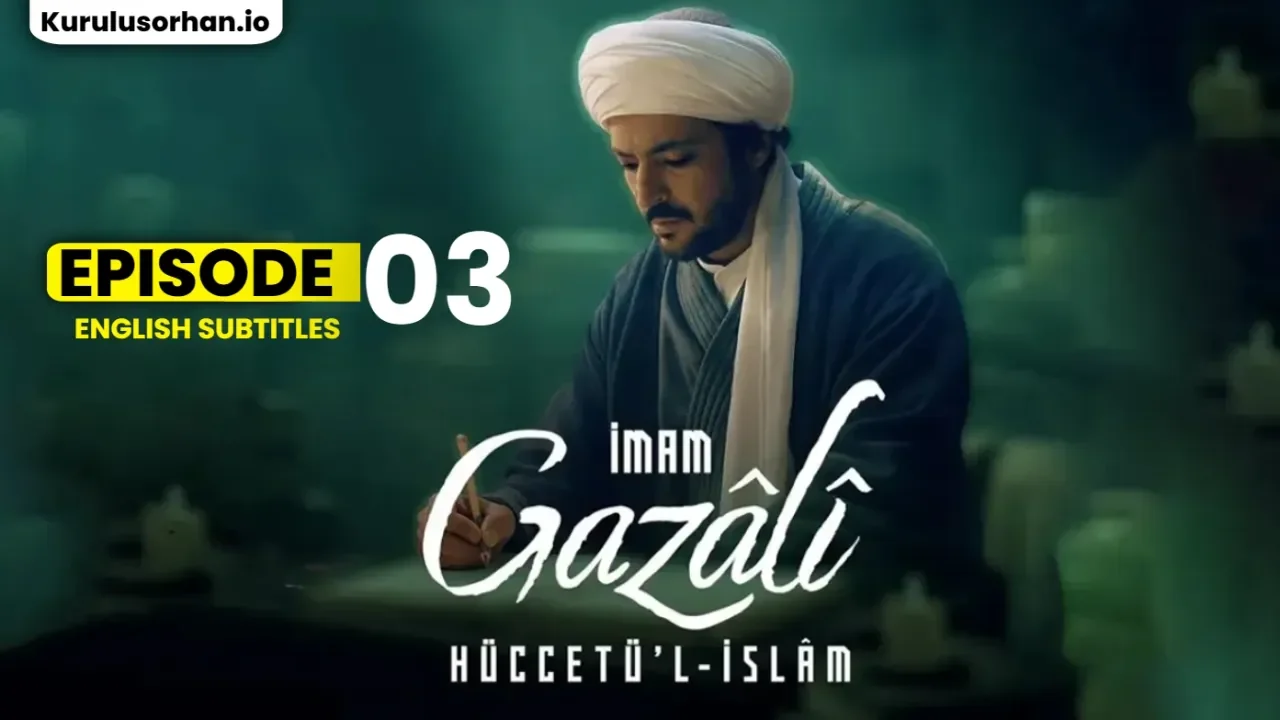
Imam Ghazali Episode 3 with English subtitles focuses on his early academic struggles, exposure to diverse ideologies, and the beginning of his spiritual questioning. It highlights the intellectual environment of Nishapur and introduces the tensions between philosophy, theology, and faith.
Table of Contents
ToggleIntroduction: Why Episode 3 Matters More Than You Think
The rising interest in historical Islamic series has pushed Imam Ghazali Episode 3 English Subtitles into global attention. This episode goes beyond storytelling—it explores the intellectual formation of one of Islam’s most influential scholars, Imam Al-Ghazali.
In my analysis, Episode 3 is where the narrative shifts from biography to transformation. It begins to show how a young student evolves into a thinker who would later challenge entire philosophical traditions.
The Historical Setting Behind Episode 3
The City of Nishapur
Imam Ghazali Episode 3 is deeply rooted in Nishapur, one of the most important intellectual centers of the 11th century.
Historical records indicate that Nishapur was a hub for:
- Advanced Islamic scholarship
- Philosophical debates
- Political influence under the Seljuk Empire
This environment shaped Al-Ghazali’s thinking. It exposed him to conflicting schools of thought, forcing him to question inherited beliefs.
The Role of His Teacher
Imam al-Juwayni – The Mentor Who Shaped Him
A central figure introduced in this phase is Imam al-Juwayni, also known as Imam al-Haramayn.
Based on available evidence, Juwayni was one of the leading theologians of the Ash‘ari school. His influence on Ghazali was profound:
- He trained him in logic and theology
- He encouraged critical thinking
- He exposed him to philosophical arguments
But here’s the part most viewers miss:
Juwayni didn’t just teach answers—he taught Ghazali how to question.
That intellectual independence becomes dangerous later.
Check Also
- “Full Biography of Imam Ghazali and His Legacy”
- “Imam Ghazali Episode 2 Recap and Analysis”
- “Top Islamic Historical Series with English Subtitles”
Intellectual Conflict: Philosophy vs Faith
Exposure to Greek Philosophy
Imam Ghazali Episode 3 subtly introduces Ghazali’s interaction with ideas derived from Aristotle and Plato.
This is not accidental storytelling.
During the 11th century, Muslim scholars were deeply engaged with Greek philosophical works translated into Arabic. Ghazali’s exposure to these ideas created a tension:
- Rational thought vs revealed truth
- Logic vs spirituality
- Philosophy vs theology
In my analysis, Imam Ghazali Episode 3 plants the seeds of what would later become his famous critique of philosophy in Tahafut al-Falasifa.
The Beginning of a Spiritual Crisis
One of the most important developments in Episode 3 is internal—not external.
Ghazali begins to question:
- Is knowledge enough?
- Can logic lead to certainty?
- What is true faith?
This aligns with historical accounts from his autobiographical work Al-Munqidh min al-Dalal (Deliverance from Error).
Unlike typical historical dramas, this series captures something rare:
the psychology of doubt in a scholar.
And that’s where the real story begins.
Timeline of Events in Episode 3
| Phase | Key Development |
|---|---|
| Early Study | Arrival in Nishapur and formal education begins |
| Mentorship | Studies under Imam al-Juwayni |
| Exposure | Encounters philosophical ideas |
| Conflict | Begins questioning certainty of knowledge |
| Turning Point | Internal struggle between intellect and faith |
Real-World Application: Why This Episode Still Matters Today
Most viewers treat this as history. That’s a mistake.
Episode 3 reflects a problem still relevant today:
Information overload without clarity.
In modern terms:
- People consume endless knowledge
- But lack certainty or purpose
- Intellectual doubt becomes existential confusion
Ghazali’s journey offers a framework:
- Question everything—but not blindly
- Seek knowledge—but also meaning
- Balance intellect with spirituality
This is why his legacy still influences modern Islamic thought, philosophy, and even psychology.
Where to Watch Imam Ghazali Episode 3 English Subtitles
To watch Imam Ghazali Episode 3 English Subtitles, viewers typically look for:
- Official streaming platforms
- Verified subtitle providers
- Dedicated historical series websites
Ensure the platform provides accurate English translations, as poor subtitles distort the intellectual depth of the dialogue.
Unique Insight Most Articles Miss
Here’s the uncomfortable truth:
Most content treats Ghazali as a “religious hero.” That’s intellectually lazy.
Episode 3 shows something far more important:
He was deeply uncertain.
And that uncertainty—not blind faith—made him العظيم.
This directly contradicts the simplified narratives often pushed in media.
People Also Ask (FAQs)
1. What is the main focus of Imam Ghazali Episode 3?
It focuses on his early education in Nishapur, his exposure to philosophy, and the beginning of his intellectual and spiritual questioning.
2. Is Imam Ghazali Episode 3 historically accurate?
Based on available evidence, the episode aligns with major historical accounts, though some dramatization is expected.
3. Why is Nishapur important in Ghazali’s life?
Nishapur was a major center of learning where he studied under top scholars and encountered diverse ideologies.
4. Does Episode 3 show his spiritual crisis?
Yes, it introduces the early stages of the internal conflict that later defines his transformation.
Conclusion: What You Should Do Next
Episode 3 is not just another chapter—it’s the foundation of everything that follows.
If you’re watching casually, you’ll miss it.
If you’re paying attention, you’ll see the birth of a revolutionary thinker.
Next step:
Watch the episode again—but this time, focus on the questions, not the answers.


1 Comment
When will you publish episodes 4-10 of Imam Al-Gazali? It is truly an inspiring series.