
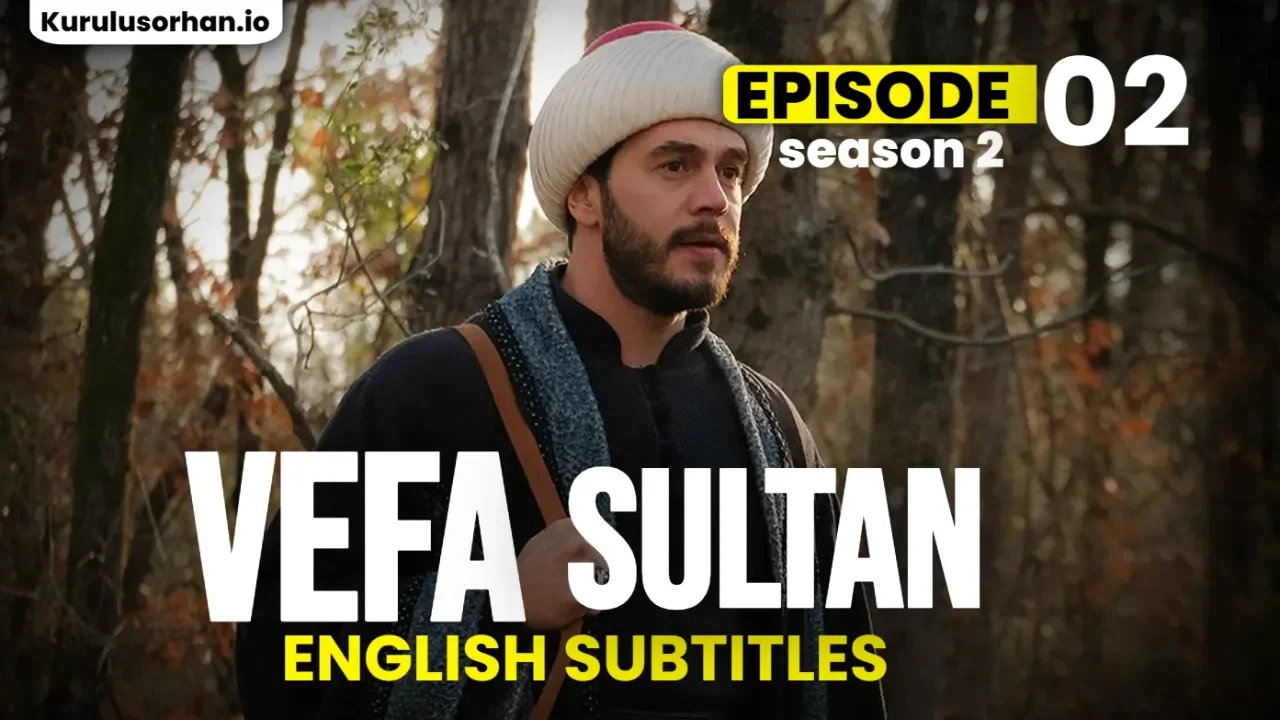
Vefa Sultan Season 2 Episode 2 English subtitles deepen the series’ spiritual narrative, focusing on healing broken hearts, the discipline of patience, and moral accountability, as Vefa Sultan guides his disciples through inner trials that mirror growing social unrest in Constantinople.
Table of Contents
ToggleWatch Episode 1: Vefa Sultan Season 2 Episode 1 English Subtitles
Introduction: When Strength Is Born From Brokenness
Vefa Sultan Season 2 Episode 2 English Subtitles moves beyond a simple continuation of the story and enters deeper spiritual territory. This episode teaches that true strength does not come from power or wealth, but from hearts that have been broken, repaired, and refined through patience. Rather than relying on spectacle, the narrative unfolds quietly, allowing wisdom to surface through lived experience.
The episode opens by framing hardship as a divine process. Just as a walking staff is shaped from wounded wood, human endurance is born from emotional fractures. This metaphor anchors the episode and guides every subplot that follows.
The Walking Staff: A Symbol of Healing and Companionship
The staff crafted in this episode is not presented as a tool of authority but as a companion. Vefa Sultan explains that some hearts are so sensitive that they require more than strength; they need support. For a dervish, a broken staff represents more than physical damage—it signals a wounded heart.
This symbolism reinforces a central Sufi teaching: objects gain meaning through intention. The staff becomes a quiet witness to suffering and recovery, mirroring the inner state of those who lean upon it.
Hearts That Carry One Another
One of the episode’s most emotionally resonant ideas is the concept of shared hearts. The narrative suggests that when one soul is wounded, another bound to it feels the pain. This interconnectedness is not portrayed as weakness but as spiritual sensitivity.
The episode reminds viewers that love is not measured by possession but by endurance. Loving someone means bearing their pain without complaint, and repairing what others break.
Broken Hearts and Sacred Accountability
The episode introduces a powerful moral statement attributed to prophetic tradition: breaking a human heart is presented as a grave spiritual offense. This idea shapes the ethical framework of the story.
Characters who exploit the weak, particularly those under spiritual protection, are not portrayed as clever or powerful. Instead, they are shown as spiritually bankrupt, destined to face accountability.
Constantinople’s Hidden Turmoil
While the episode remains spiritually driven, it subtly exposes social decay in Constantinople. Gambling, extortion, and intimidation spread quietly through the marketplace. The threat does not come from open rebellion but from moral erosion.
This contrast highlights the series’ unique strength: it treats social injustice as a spiritual illness rather than a political problem alone.
Moral Authority Without Violence
When injustice touches those under Vefa Sultan’s care, his response is calm but unyielding. He does not rush to punishment. Instead, he insists on proof, fairness, and discipline rooted in spiritual law.
This restraint elevates the narrative. Justice is not driven by anger but by responsibility, reinforcing the idea that moral authority is strongest when it resists impulse.
The Weight of Responsibility in Leadership
Episode 2 emphasizes that leadership within a spiritual community is a burden, not a privilege. Every decision carries consequences for the innocent. The episode warns that acting without certainty can cause harm equal to inaction.
This balanced approach to justice sets the tone for future conflicts, where impatience could lead to irreversible damage.
Love, Fear, and the Silence Between Them
A parallel storyline explores unspoken love and emotional paralysis. Fear of rejection traps the heart between hope and despair. The episode treats this hesitation with compassion rather than judgment.
Love is depicted as something that grows quietly. Rushing it risks destruction, while patience allows sincerity to mature.
Marriage, Duty, and Gentle Conduct
Through scholarly discussion, the episode reinforces ethical teachings on marital responsibility. Provision, protection, dignity, and kindness are presented as inseparable duties.
The emphasis on gentle conduct highlights the series’ commitment to portraying relationships as spaces of mercy rather than control.
Knowledge, Discipline, and Intellectual Humility
The episode briefly touches on scholarly pursuits, emphasizing discipline and humility in the pursuit of knowledge. True learning is shown as a responsibility, not a status symbol.
This reinforces the episode’s broader message: wisdom without character leads to arrogance, while humility sharpens understanding.
Patience as a Measure of Spiritual Readiness
A central lesson of Episode 2 is that spiritual advancement cannot be rushed. A dervish seeking isolation must first prepare the foundation that will support the weight of self-confrontation.
The episode uses the metaphor of seasoned wood: material that has not waited loses strength under pressure.
Key Moments in Vefa Sultan Season 2
- Introduction of the symbolic walking staff
- Reflection on shared emotional bonds
- Rising injustice in the marketplace
- Moral response to exploitation
- Teaching on patience and readiness
Why Episode 2 Matters for Season Two
This episode deepens the philosophical framework of the season. It shifts focus from personal spirituality to communal responsibility, preparing the narrative for broader ethical confrontations.
Rather than advancing plot aggressively, the episode strengthens thematic foundations that will support future developments.
People Also Ask (FAQs)
Is Vefa Sultan Season 2 Episode 2 available with English subtitles?
Yes, the episode is available with accurate English subtitles for international audiences.
What is the main message of Vefa Sultan Season 2?
The episode emphasizes patience, moral accountability, and healing broken hearts.
Does Vefa Sultan Season 2 include conflict?
Yes, but the conflict is ethical and spiritual rather than physical.